
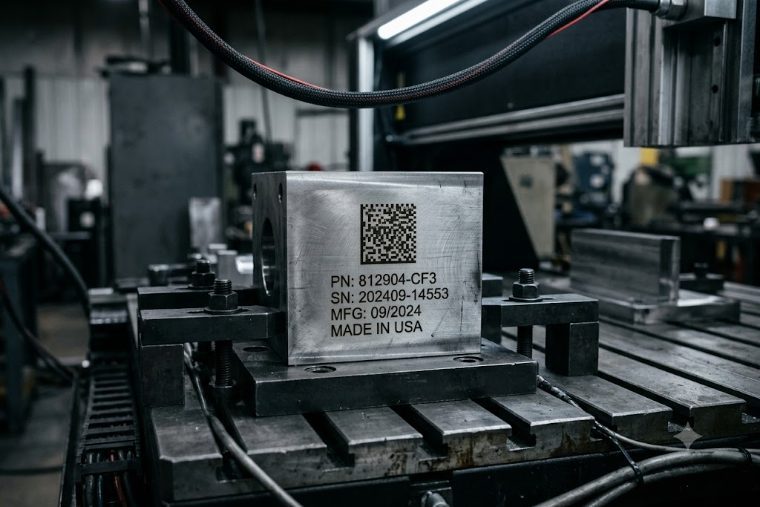
Is it the right machine
What a fiber marker is for.
It marks; it does not cut. Inside that sentence is most of the decision.
A good fit when…
- Permanent marks straight onto bare steel, stainless, aluminum and brass
- Serial numbers, 2D codes, barcodes, logos and part identification
- Repeatable production marking — the same mark, the same place, part after part
- Round parts, with a rotary under the head
- Laser-friendly plastics, where the polymer takes a fiber mark
Look elsewhere when…
- You need to cut, not mark. A marker never cuts through.
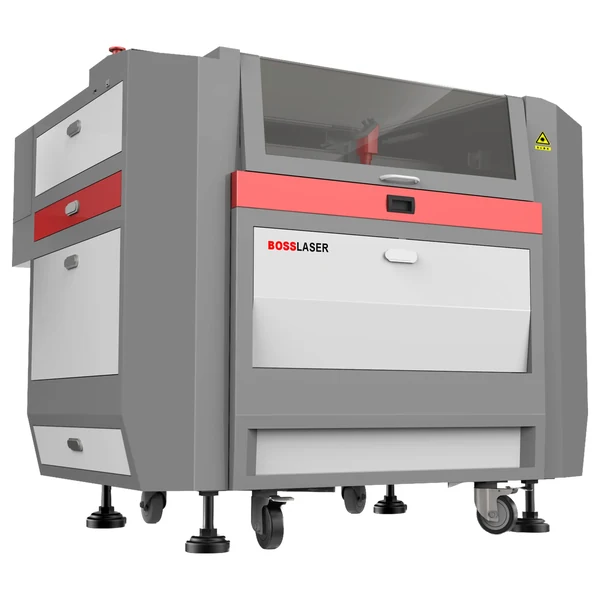
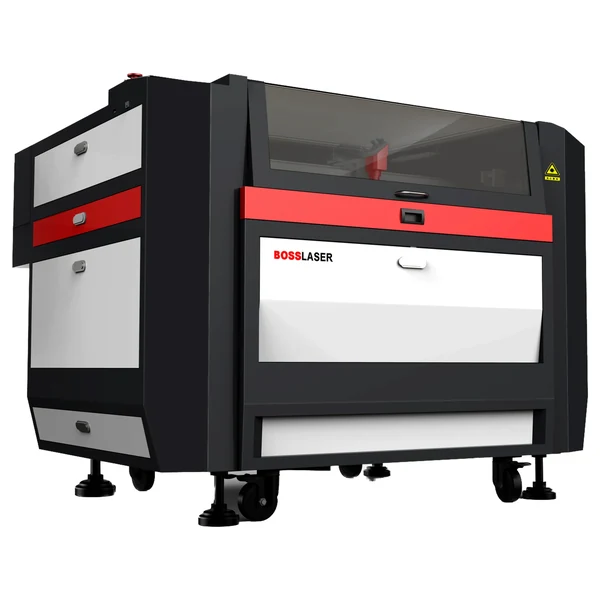
Laser cutters → - The work is wood, acrylic, leather or paper. That’s a CO₂ laser, and a much bigger bed.
LS Series → - Fine glass, precision ceramic or heat-sensitive parts, where 1,064 nm is too much heat.
UV Laser Markers → - The part is bigger than the marking field. The part gets repositioned, or the lens gets bigger.
Lens & field size →
The machines
Two fiber markers.
Same wavelength and the same marking speed. The difference is power, lens choice and where the machine lives.
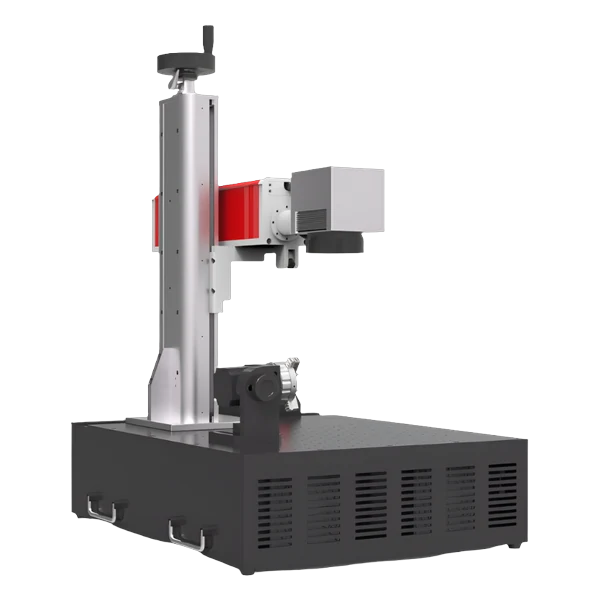
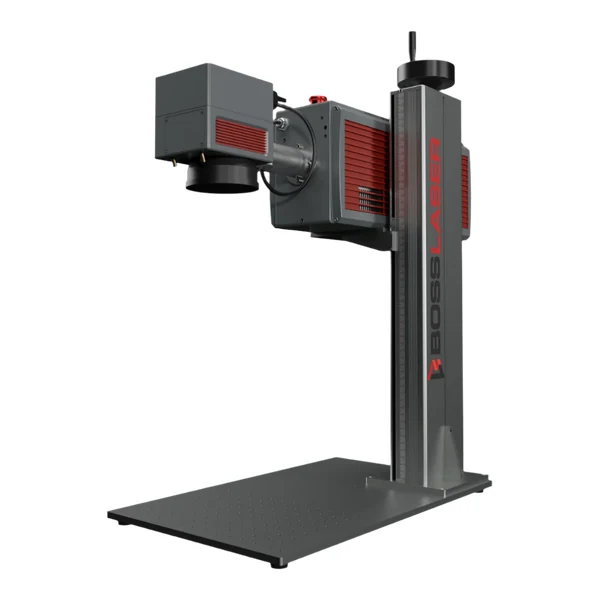
FM-D Desktop
The desktop fiber marker: one 30 W source, a choice of two lenses, and a footprint that sits on a bench. Air-cooled, so there is no chiller to plumb.

FM-Station
The floor-standing marker: up to 100 W, three lens options and an optional enclosure. The step up when parts get bigger, runs get longer, or the machine has to sit on a production floor.

CO₂ Galvo RF Marker
Built like a fiber marker — a galvo head scanning a fixed field — but running a 60 W RF CO₂ source at 10.6 µm. That wavelength marks the organics a CO₂ laser suits, not bare metal, and it does it at galvo speed.
The CO₂ Galvo sits with the markers because of what it is — a galvo head marking a fixed field — not because of its wavelength. At 10.6 µm it marks what a CO₂ laser marks: wood, acrylic, leather, paper and coated surfaces. It will not mark bare metal.
Side by side
The three compared.
Boss publishes different measures for each, so a few rows don’t line up exactly. They’re shown as Boss states them.
| FM-D Desktop | FM-Station | CO₂ Galvo RF | |
|---|---|---|---|
| Marks | Bare metal, and laser-friendly plastics | Bare metal, and laser-friendly plastics | Organics — wood, acrylic, leather, paper, coated surfaces |
| Wavelength | 1,064 nm | 1,064 nm | 10.6 µm |
| Laser power | 30 W | 30 W, 50 W or 100 W | 60 W RF |
| Lens options | 160 mm, 290 mm | 160 mm, 290 mm, 420 mm | Not listed as a buy option |
| Enclosure | Not offered | Open / enclosed | Open head |
| Marking speed | Up to 5,000 mm/s | Up to 5,000 mm/s | Up to 10,000 mm/s |
| Accuracy (as Boss states it) | Repeat 0.002″ | Repeat 0.002″ | Position ±0.002 mm |
| Beam quality (M²) | < 1.5 at 30 W | 1.5–2.0 | < 1.2 |
| Cooling | Forced air | Forced air | Not listed |
| Size (D × L × H) | 28″ × 19.75″ × 34″ | 30″ × 30″ × 65″ | 35.5″ × 13.75″ × 26.75″ head, plus a 15″ console |
| Weight | 120 lb | 220 lb | 63 lb, plus a 17.5 lb console |
| Electrical | 110V / 50–60 Hz | 110V / 50 Hz · 2 kVA | 110V / 60 Hz, single phase |
| Warranty | 2 years, including the fiber laser | 2 years, including the fiber laser | Not listed on the product page |
| Manuals & parts | FM-D Desktop support | FM-Station support | CO₂ Galvo RF Marker support |
What changes the mark
The choices that decide what you get.
On a marker, the lens and the settings do more work than the wattage does.
Where it’s used
The work a fiber marker usually runs.
Each application page covers the materials, settings questions and machine paths in depth.
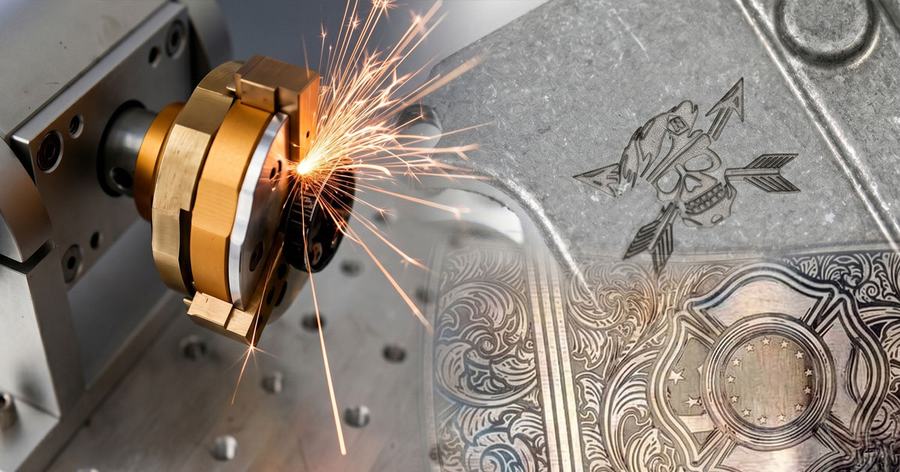
Metal marking & identification
The home page for this work: what marks on which metal, annealing against etching, and where UV takes over.
See the application →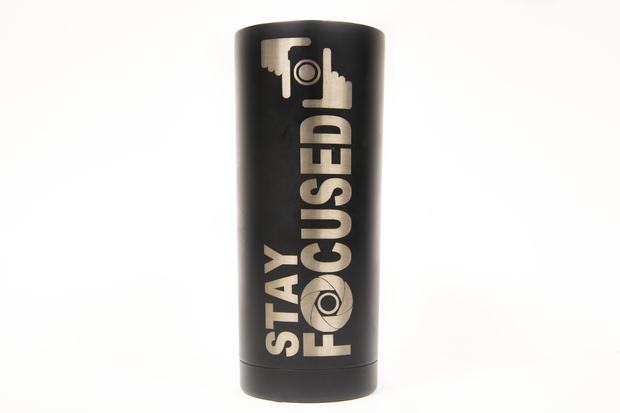
Personalization & gifts
Bare metal in a product line — tumblers, flasks, tools, jewellery blanks — is where a marker joins a CO₂ laser.
See the application →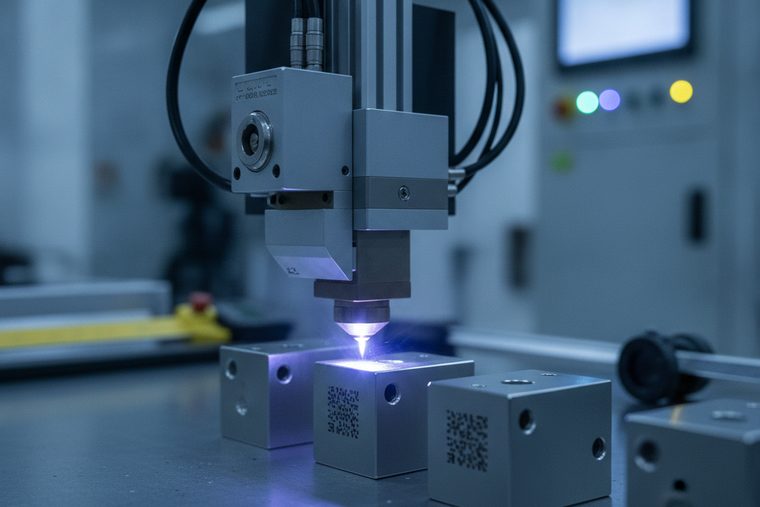
Schools & institutions
Asset tagging, part identification and traceable marks, which is often why an institution buys a marker at all.
See the application →Questions
What people ask before choosing a marker.
Straight answers from Boss’s published specs.
FM-D Desktop or FM-Station?
The FM-D is the bench machine: one 30 W source, two lens choices, 120 lb, air-cooled. It suits a shop marking parts alongside other work.
The FM-Station goes to 100 W, offers a third lens and an enclosure, and stands on the floor at 220 lb and 65″ tall. It’s the choice when parts are bigger, runs are longer, or the machine belongs on a production floor.
What can a fiber marker actually mark?
Bare metals — steel, stainless, aluminum, brass — directly, with no coating or spray. It also marks laser-friendly plastics, though contrast varies a lot by polymer.
It does not mark wood, acrylic, paper or leather — that is CO₂ work — and for fine glass or precision ceramic the answer is a UV marker, which puts far less heat into the part.
Can it cut, or only mark?
It marks, etches and — in repeated passes — engraves to depth. It does not cut parts out. Cutting metal is a fiber cutter, a kilowatt-class machine: the FC family.
How big a part can it mark?
The part can be any size that physically fits under the head; the limit is the marking field, which is fixed by the lens. A part bigger than the field gets repositioned and marked in sections, or moved to a larger-field lens.
Boss sells lenses by focal length — 160 mm, 290 mm, 420 mm on the FM-Station. Confirm the exact field each one gives for your configuration; the lens guide explains why it matters.
Other machines
Not quite the right machine?
Each of these answers a different job. Start from the work, not the model name.
Marking metal in production?
Send the Spec Desk the part, the metal, the mark and how many a day. Power and lens fall out of those four answers.
Specs are Boss’s published product-page spec tables (verified 2026-07-30). Laser power, drive, cooling and air-assist choices are read live from the Boss store, which is where current pricing lives.