
Is it the right machine
One machine for two kinds of work.
The HP earns its place in a shop that cuts non-metals and needs thin metal occasionally. If metal is the business, a fiber cutter is the machine.
A good fit when…
- Everything a CO₂ laser does — wood, acrylic, leather, paper, fabric, glass and stone engraving
- Plus thin sheet metal on the same bed, without a second machine
- Prototype and short-run metal parts alongside non-metal work
- Marking pre-treated and coated metals
Look elsewhere when…
- Metal is the business, or you need thickness past a gauge or two. That’s a fiber cutter — a different class of machine, and a different order of price.
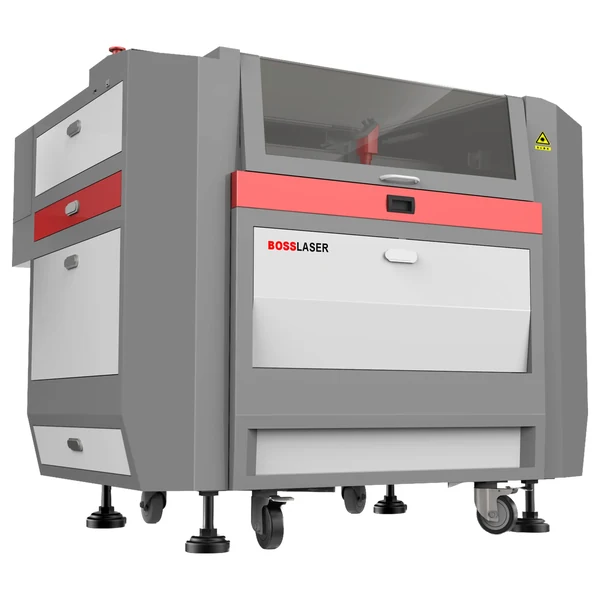
Fiber cutters → - You’ll never cut metal. The LS is the same platform without the metal head.
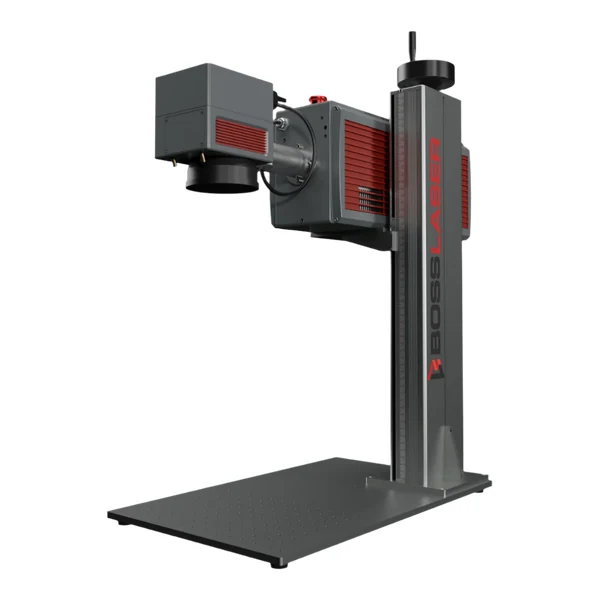
LS Series → - You’re marking bare metal rather than cutting it.
Metal marking → - You need a desktop, or a first machine.
EVO Desktop →
The models
Three sizes, and they are not the same machine.
The HP-2440 and HP-3655 sit on LS frames. The HP-5598 is a production machine: bigger bed, a tube option the others don’t have, and it arrives uncrated.
HP-2440
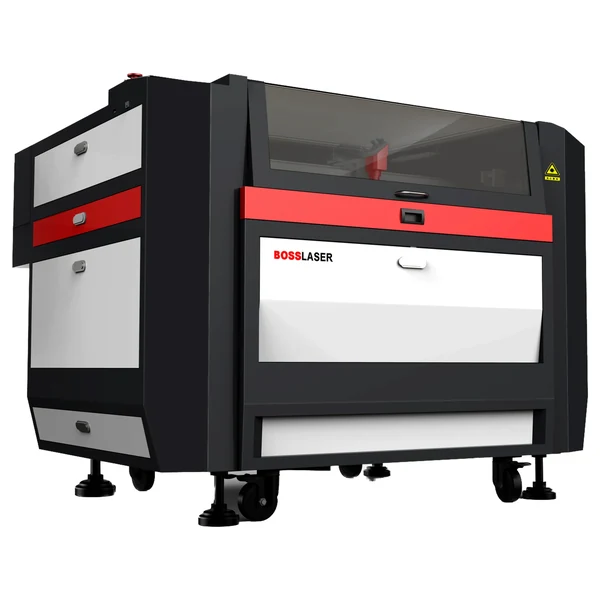
The smallest HP, on the same frame as an LS-2440. Sawtooth and knife-blade platforms instead of honeycomb, because metal sits differently on the bed.

HP-3655
The large-format HP: a 54″ × 33″ bed with material pass-throughs, and the model Boss publishes an 18-gauge sheet-metal figure for.
HP-5598
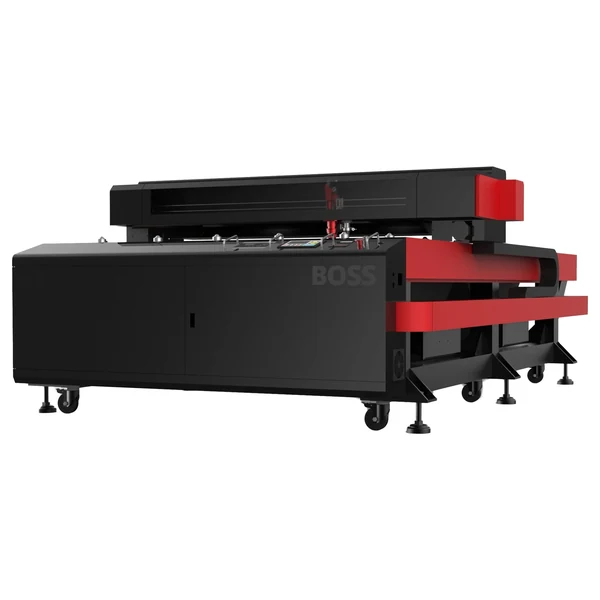
A different machine from the other two: a 98.5″ × 51.18″ bed, the option of a 250 W Iradion tube instead of the 155 W, and 14-gauge sheet metal. It ships uncrated at 2,800 lb.
Side by side
The three HPs compared.
Boss publishes a sheet-metal gauge for the 3655 and the 5598, and not for the 2440.
| HP-2440 | HP-3655 | HP-5598 | |
|---|---|---|---|
| Bed (cutting area) | 38.5″ × 21.2″ | 54″ × 33″ | 98.5″ × 51.18″ |
| Sheet metal | Thin metal — Boss publishes no gauge for this model | Up to 18 gauge | Up to 14 gauge |
| Laser power | 155 W | 155 W | 155 W or 250 W Iradion |
| Drive | Hybrid servo, 1,000 mm/s | Hybrid servo, 1,000 mm/s | NEMA hybrid stepper, up to 1,000 mm/s |
| Z | 7″ motorised | 7.5″ push-button | 2″ reciprocating |
| Platform | Sawtooth & knife blade | Sawtooth & knife blade (honeycomb optional) | Knife blade |
| Machine size (L × W × H) | 81.1″ × 46.5″ × 44.5″ | 81.5″ × 58.2″ × 44.5″ | 132″ × 84″ × 46.5″ |
| Shipping | Crated 84″ × 47″ × 48″ · 1,300 lb Verify | Crated 86″ × 64″ × 50″ · 1,475 lb | Ships uncrated · 2,800 lb |
| Venting | Exhaust fan with venting pipe | Exhaust fan with venting pipe | Dual exhaust fans; optional gantry-mounted ports |
| Electrical | 110V · up to 20 A | 110V · up to 20 A | 110V · 1,500 W / 20 A |
| Warranty | 2 years parts · 1 year laser tube | 2 years parts · 1 year laser tube | 2 years parts · 1 year laser tube |
| Manuals & parts | HP-2440 support | HP-3655 support | HP-5598 support |
Sheet-metal gauges are Boss’s own published figures per model. Cutting metal on a CO₂ laser is thin-gauge work in every case. ⚠ Boss’s HP-2440 page gives two different machine weights (785 lb inside the dimensions line, 1,200 lb as net weight), so neither is published here — the crated figure is.
HP or LS
What the letters actually mean.
This is the question the HP exists to answer, and the one most often answered wrongly.
HP stands for Hybrid Processing. An LS with a 155 W tube and an HP with a 155 W tube carry the same laser. The HP ships with a metal-cutting head whose air holes deliver assist air differently, and that head — not the wattage — is what lets it cut thin sheet metal.
⚠ “High-power CO₂” means something else in the industry, and it is not a Boss machine. For steel much past an inch, high-power CO₂ does beat fiber — but that means multi-kilowatt industrial systems, a different class entirely. Boss’s CO₂ line tops out at 155 W (250 W on the HP-5598), which is exactly why its metal ceiling is a gauge figure and not a thickness in inches.
Choices at purchase
The options that change the machine.
Picked on the Boss store when you buy.
Where it’s used
The work an HP usually runs.
Each application page covers the materials, settings questions and machine paths in depth.
Metal cutting & fabrication
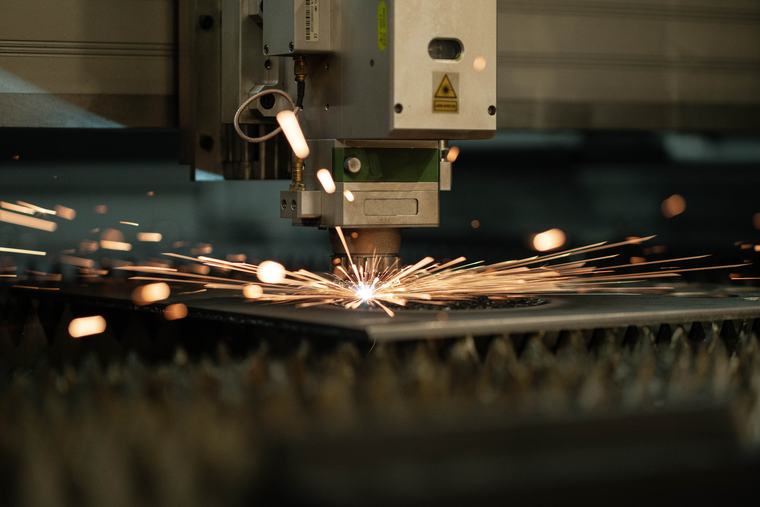
Thin-gauge sheet on a CO₂ platform. The page covers where that ends and a fiber cutter starts.
See the application →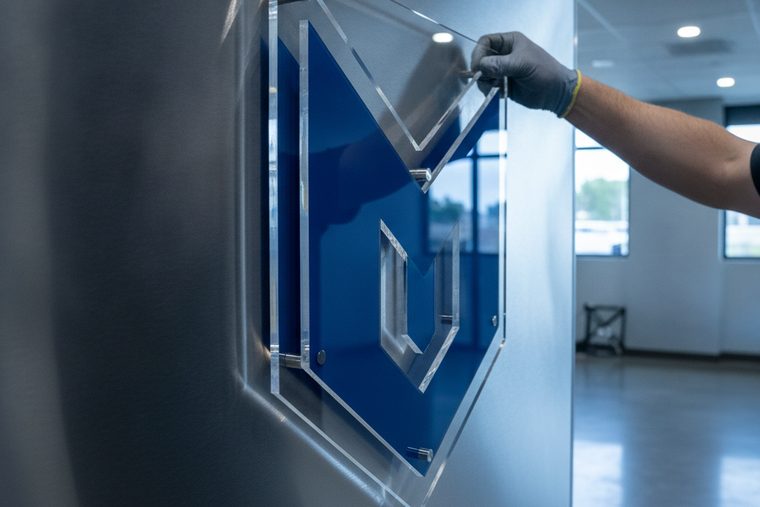
Acrylic & plastics
The large-format beds run full sheets, which is the usual reason a sign shop moves up.
See the application →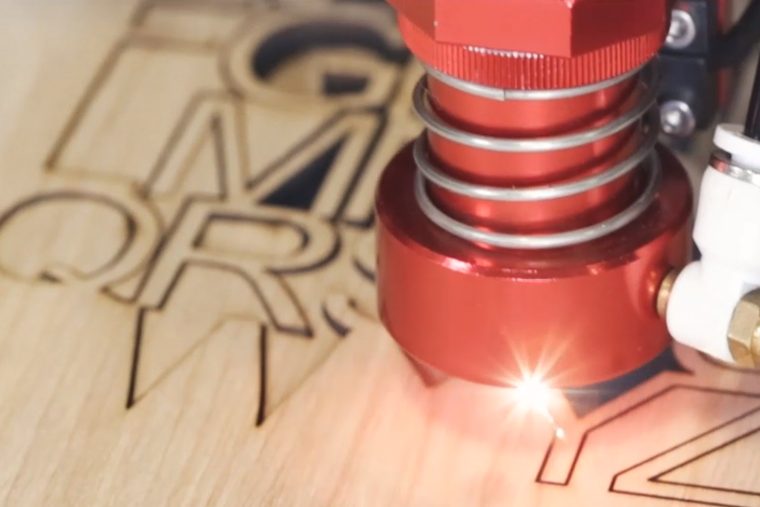
Wood & natural materials
Everything the LS does on wood, on the same platform, with metal available when a job needs it.
See the application →Questions
What people ask before choosing an HP.
Straight answers from Boss’s published specs.
How thick a metal can an HP actually cut?
Boss publishes sheet metal up to 18 gauge on the HP-3655 and up to 14 gauge on the HP-5598, which is the model with the 250 W Iradion tube option. For the HP-2440, Boss lists thin metal without naming a gauge.
In stainless terms that’s roughly 18-gauge stainless or 20-gauge mild steel on a 155 W machine. This is sheet work — for plate, or for metal in volume, the answer is a fiber cutter.
Is an HP just a more powerful LS?
No. An LS at 155 W and an HP at 155 W carry the same tube. The difference is the metal-cutting head the HP ships with, which delivers air assist differently, plus the sawtooth and knife-blade platforms that suit metal.
If you will never cut metal, the LS is the same platform for less.
What does the 250 W option on the HP-5598 change?
It is a different tube — an Iradion, rather than Boss’s 155 W X-Series — and it is the configuration Boss rates for 14-gauge sheet. It also changes the warranty terms Boss lists, so confirm those with the tube you’re buying.
It does not turn the machine into an industrial plate cutter. That is a different class of machine entirely.
Can one HP replace a CO₂ laser and a metal cutter?
For a shop whose metal work is thin sheet, prototypes and short runs, yes — that is the machine’s whole reason for existing, and it saves a second machine, a second footprint and a second operator to train.
For production metal, no. Cut speed, thickness and duty cycle all favour a fiber cutter, and the gap widens as the sheet gets thicker.
Other machines
Not quite the right machine?
Each of these answers a different job. Start from the work, not the model name.

Cutting metal and non-metal on one machine?
Tell the Spec Desk both jobs — the materials, the gauges and the biggest sheet. That’s the conversation that decides HP against a fiber cutter.
Specs are Boss’s published product-page spec tables (verified 2026-07-30). Laser power, drive, cooling and air-assist choices are read live from the Boss store, which is where current pricing lives.