
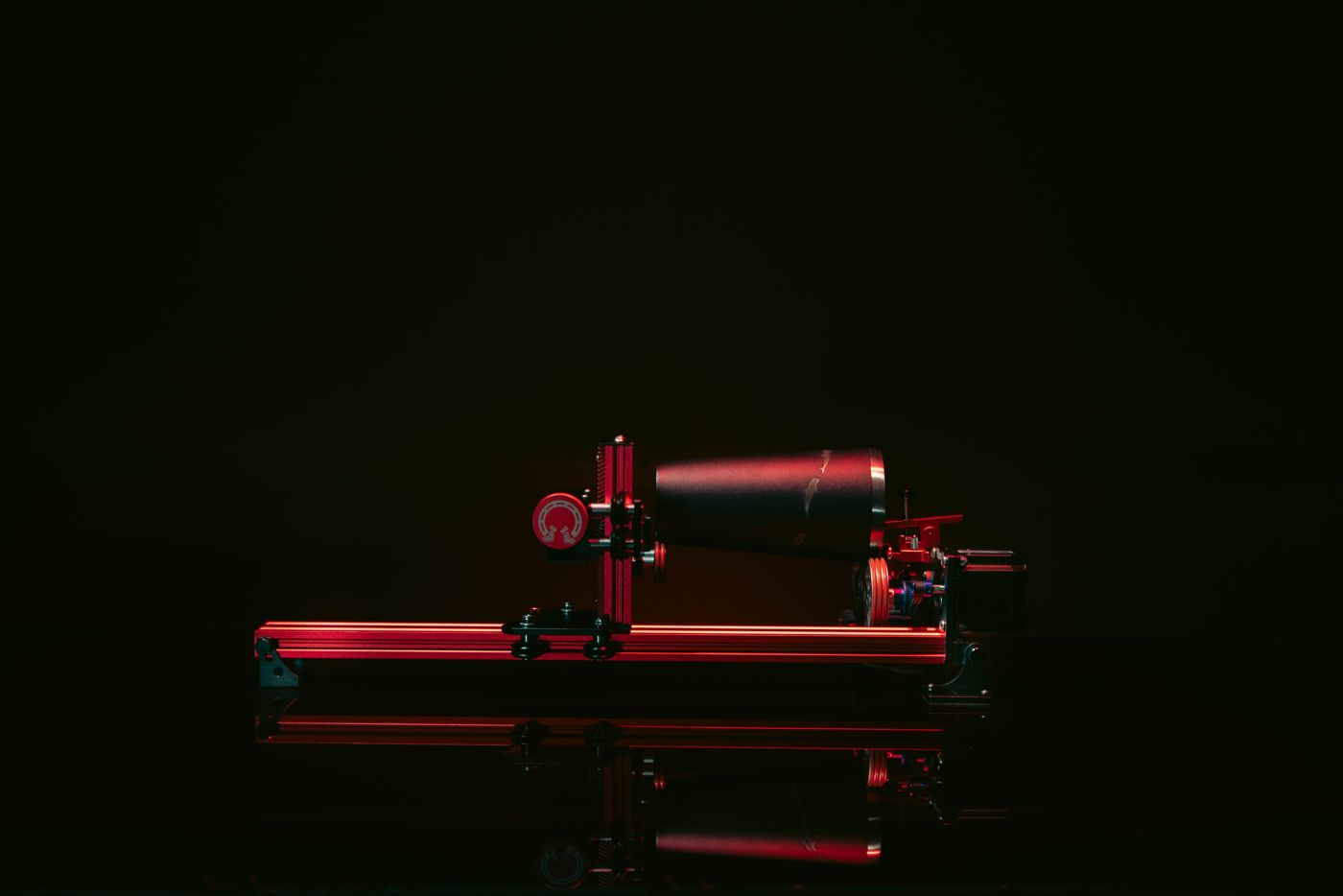
CO₂ laser engraver + PiBurn rotary
Laser Engraver With Rotary
Tumblers, glassware, bottles and bats all need a rotary to turn them under the beam. Start with how a rotary works, then pick the machine and the rotary together.
What is a rotary, and why does a laser need one?
A laser engraves flat surfaces. A rotary is the accessory that lets it engrave round ones. Here’s what it is and which one you need, before you pick a machine.
Set the part on the rotary
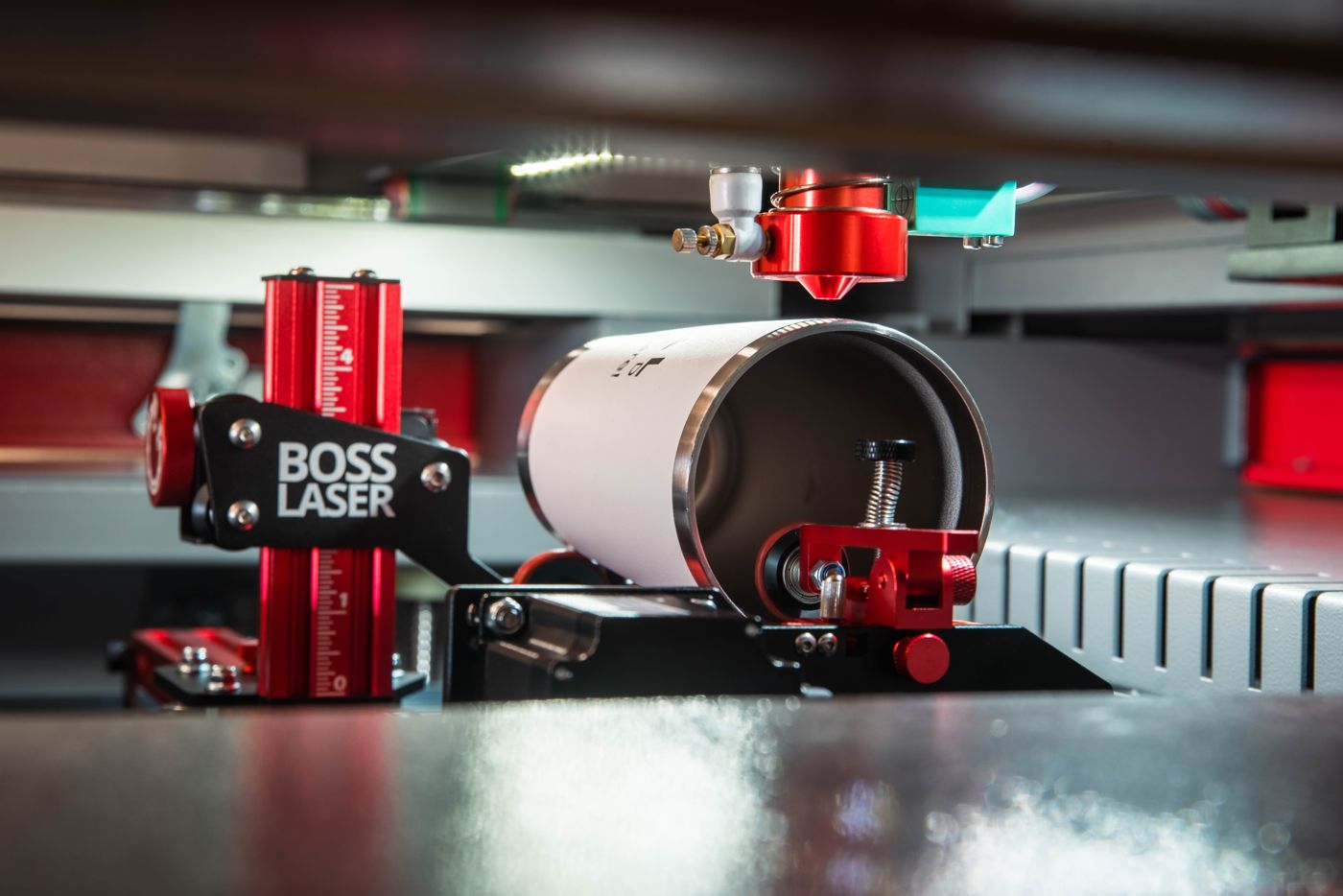
The rotary sits in the machine bed and plugs into the machine. Rest a tumbler on its rollers, or clamp it in a chuck.
Tell the software
Turn the rotary on in the laser software and enter the part’s diameter, so the artwork wraps around it without stretching.
Run the job
Instead of moving the head front to back, the machine turns the part under it, and the design wraps all the way around.
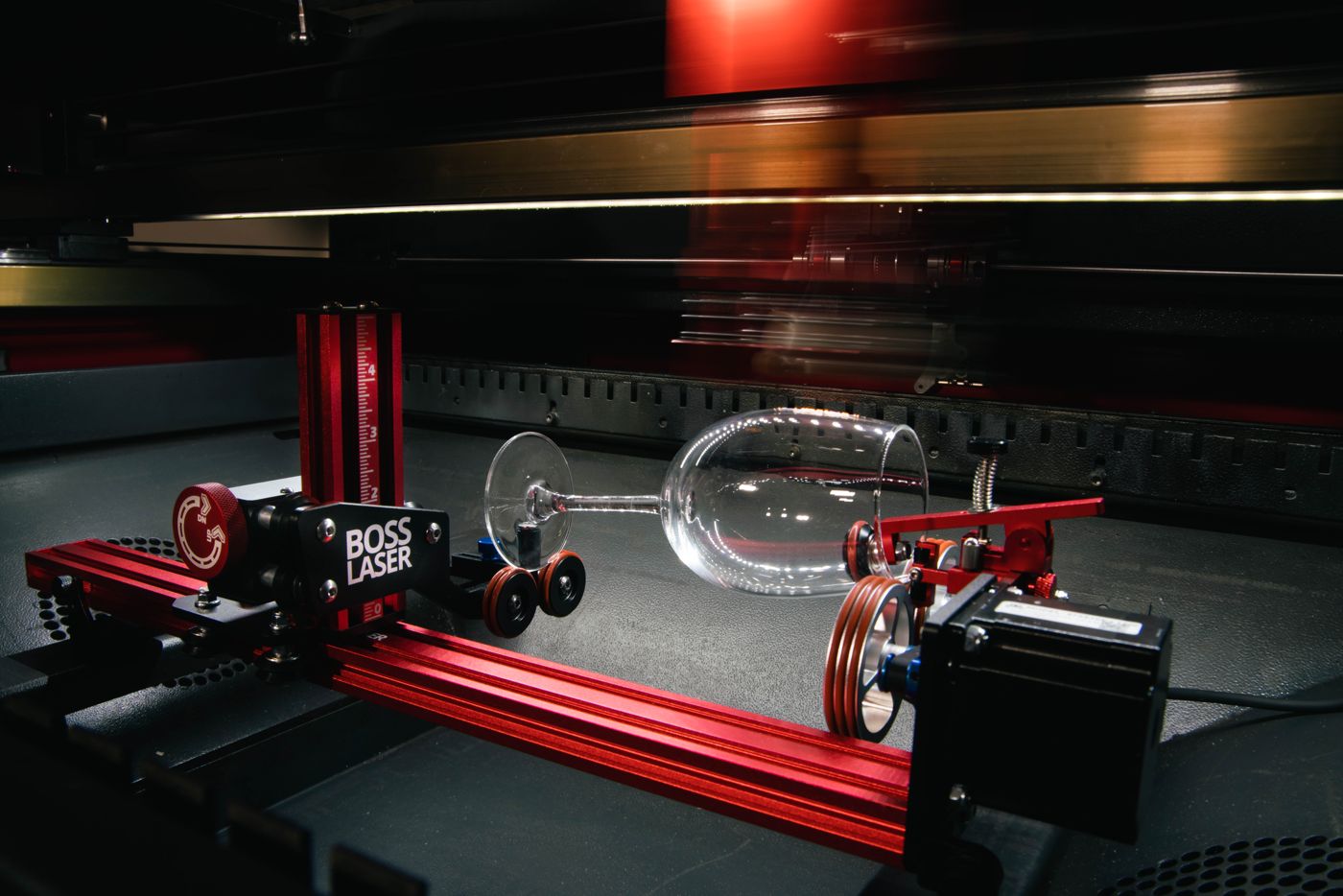
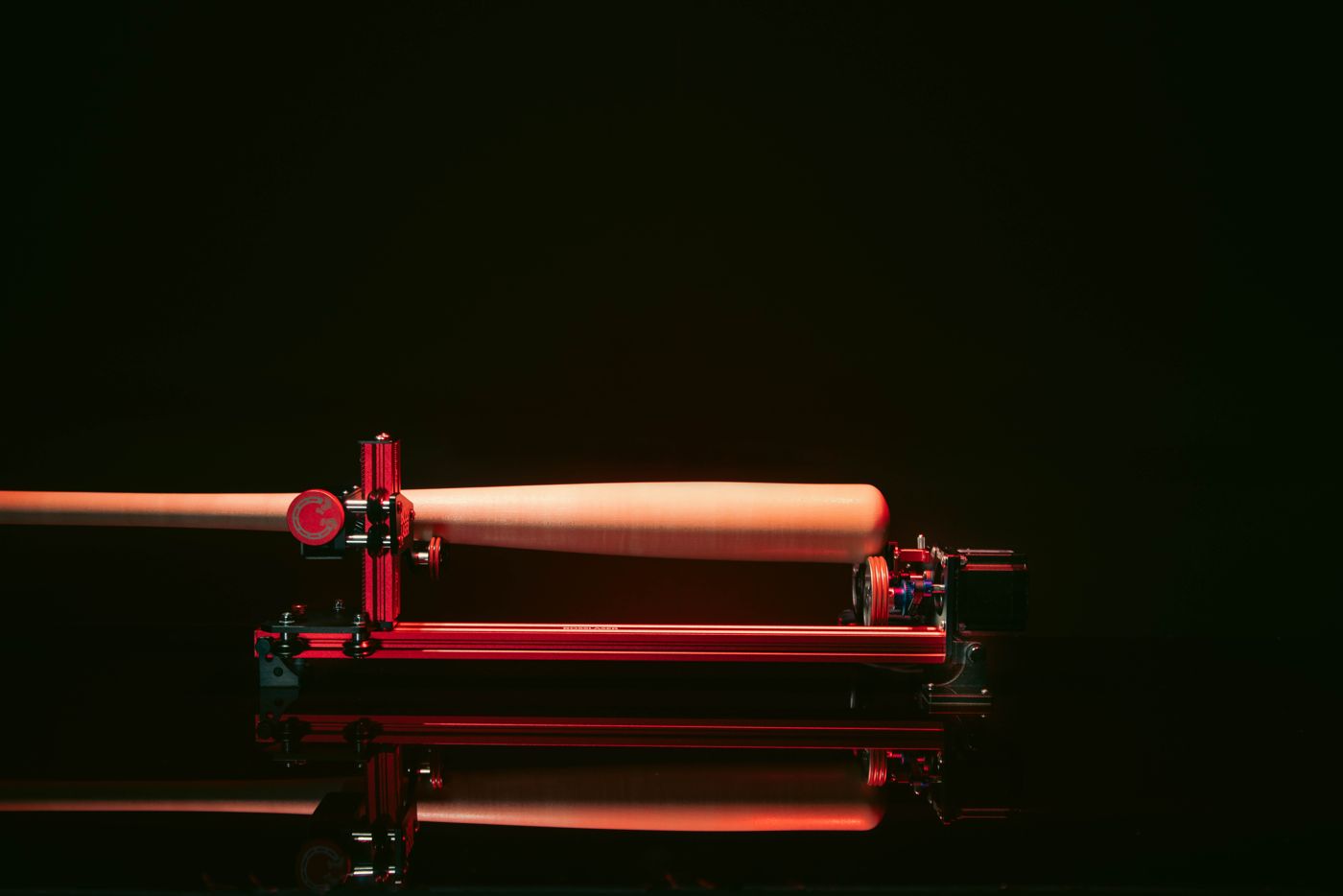
The PiBurn V: the part rides on rollers.
Boss sells two kinds of rotary from PiBurn. Most round work starts on this one.
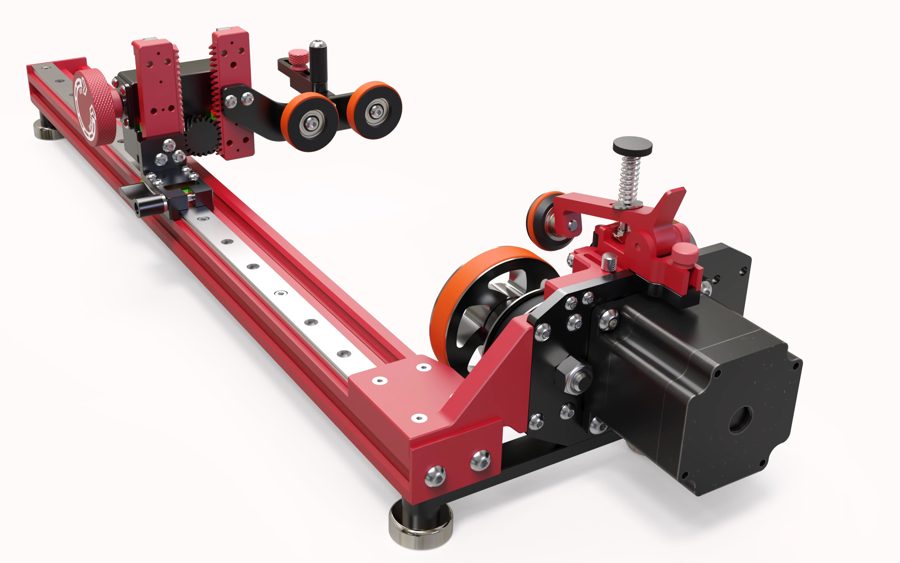
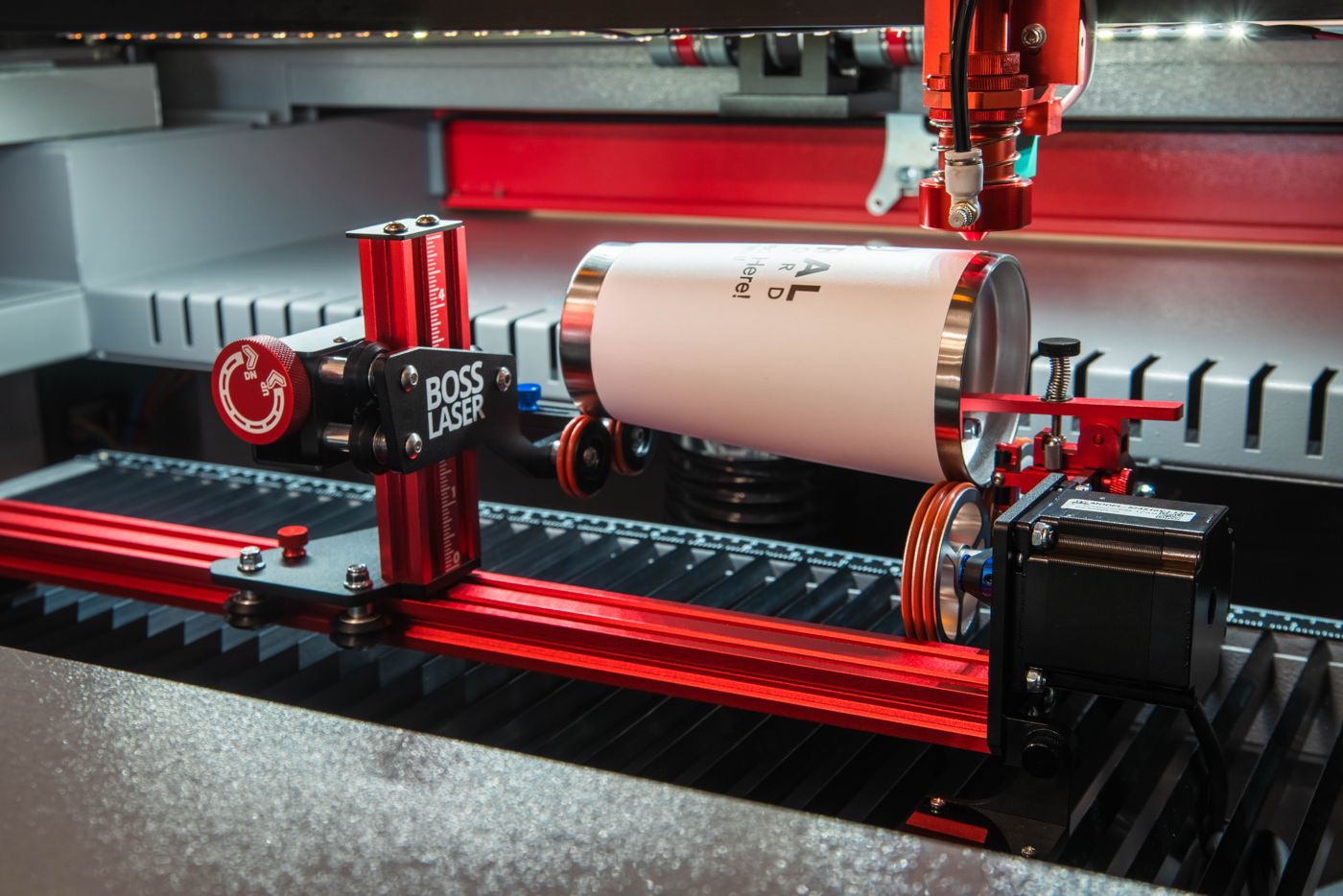
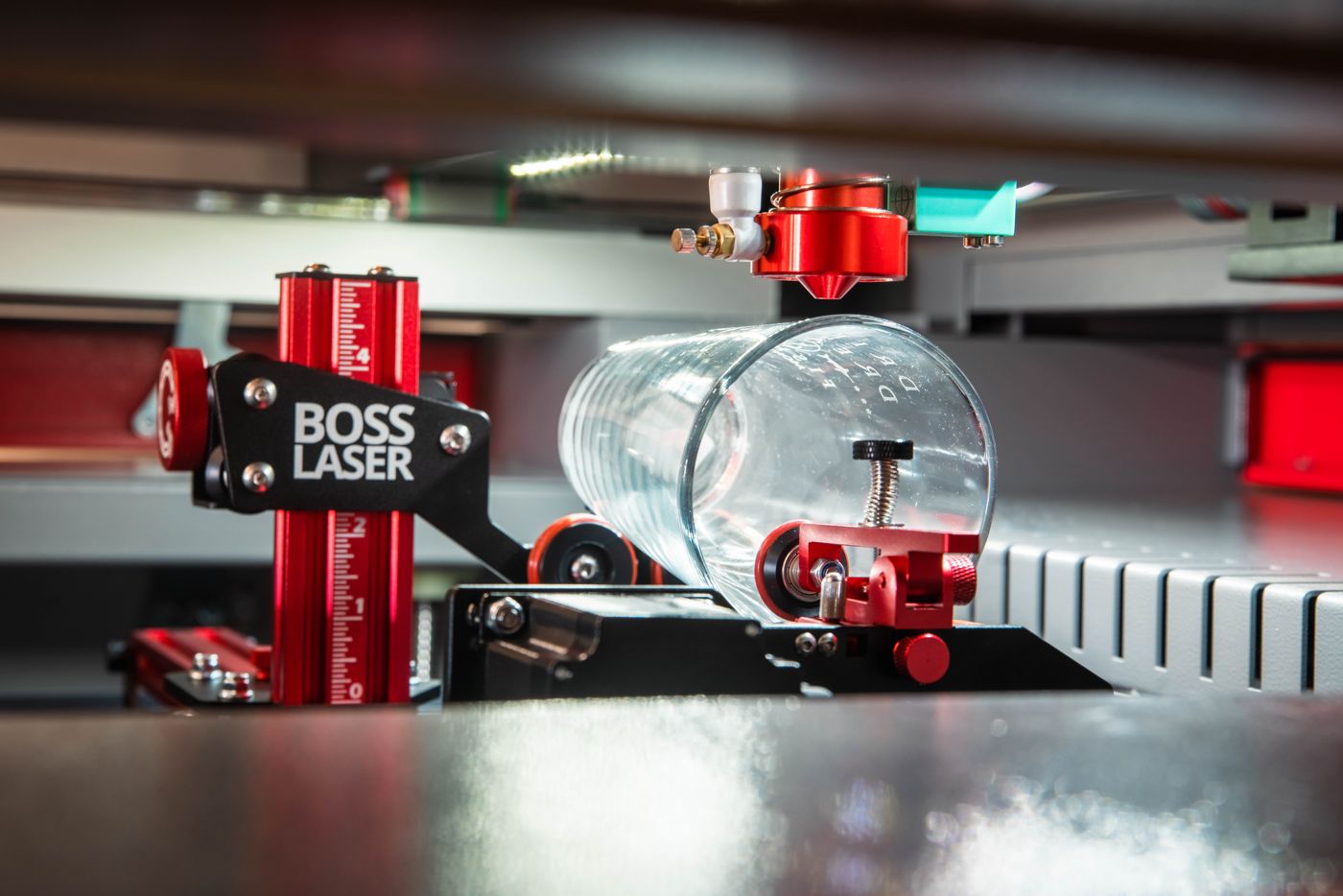
PiBurn V
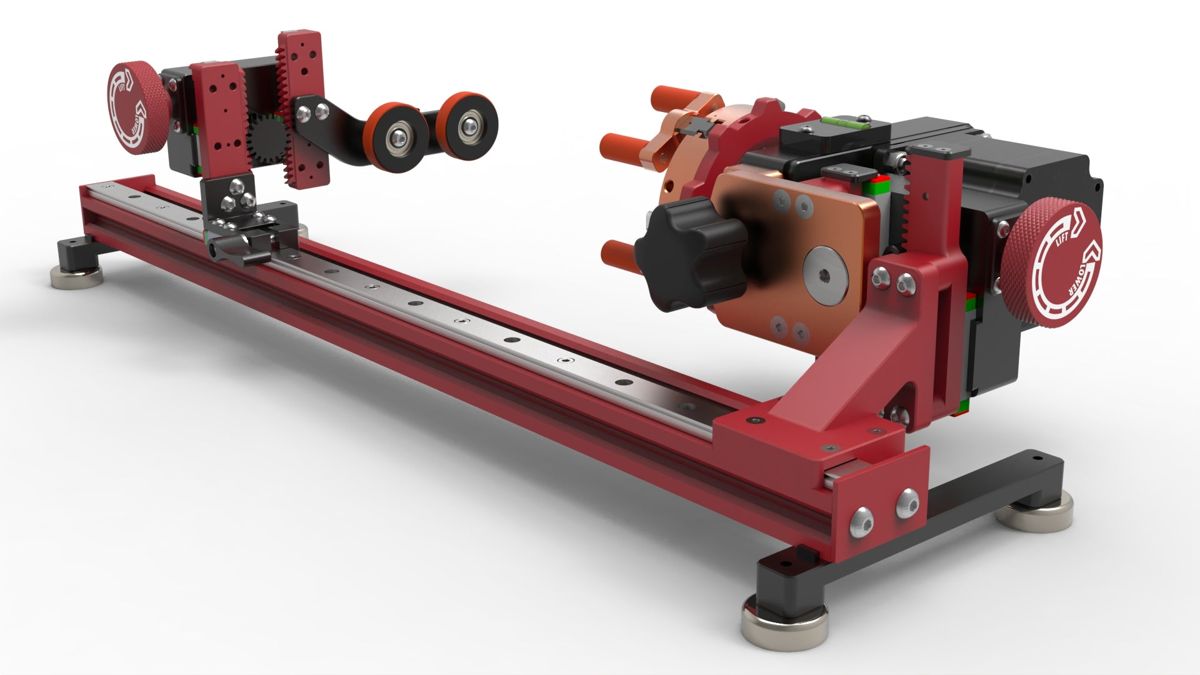
The part rests on two sets of rubber-tired wheels. One set is driven by a motor and turns the part; the other supports the far end. You slide the support along a rail to fit the length of the piece, then set the part in place. There’s nothing to clamp.
Good for
- Tumblers and straight-walled glassware
- Mugs with handles and shot glasses
- Baseball bats and other long round parts
From Boss’s listing
- Linear rail, so there’s no aligning the back wheels
- One-hand lever to adjust length, no thumbscrews
- Grippier tires to cut down on slipping; magnetic feet included
The PiBurn Grip 2: jaws hold the part.
For pieces that won’t sit evenly on rollers, a chuck grips the part itself and turns it.
PiBurn Grip 2
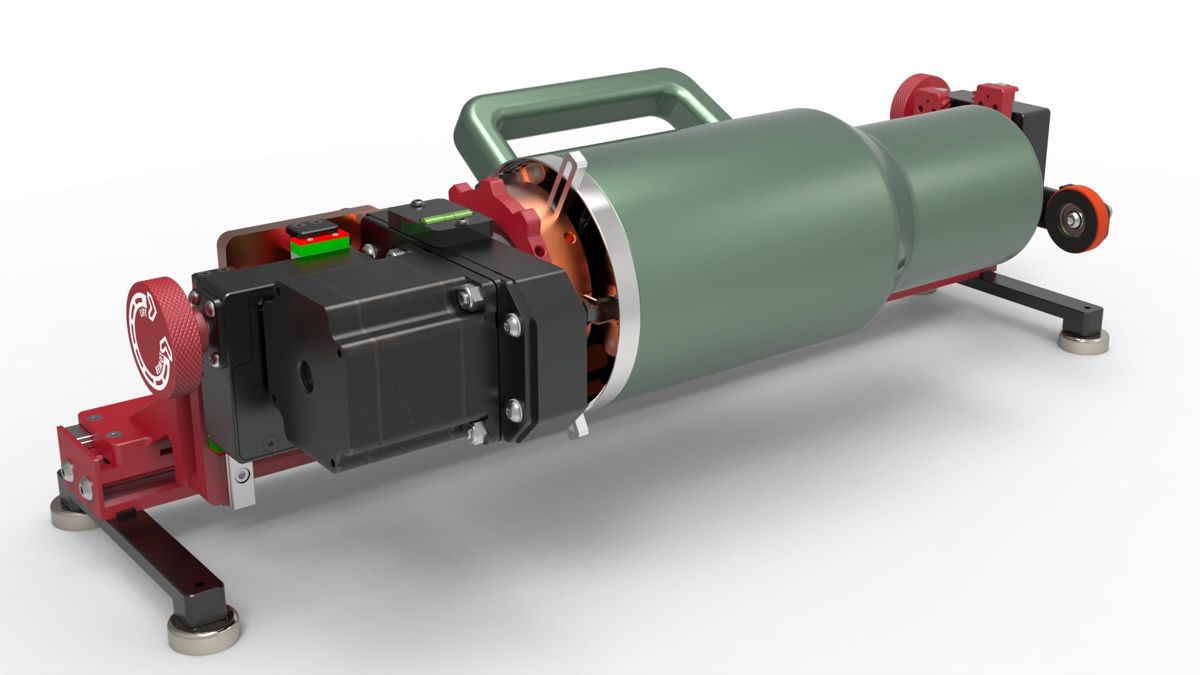
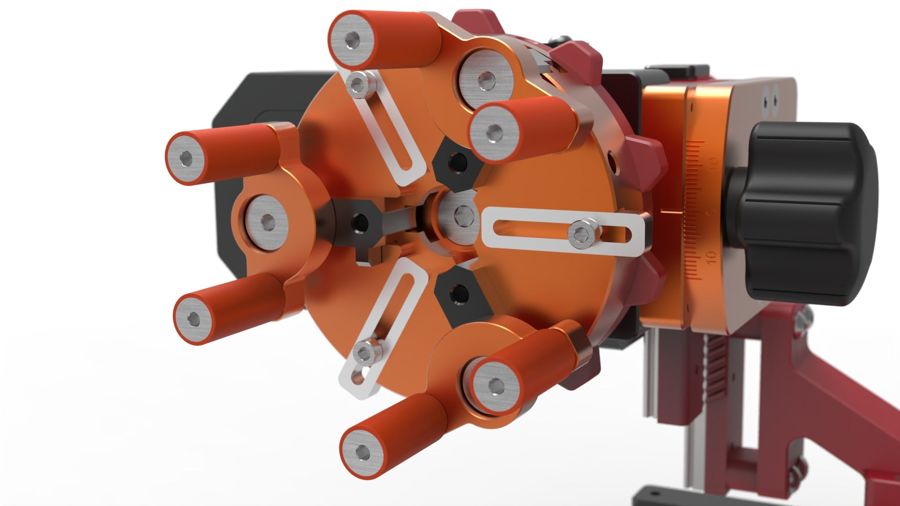
A motor-driven chuck grips one end of the part in its jaws. Support wheels at the other end carry the rest. Both the chuck and the wheels adjust up and down, so a piece that’s wider at one end can still sit level under the beam.
Good for
- Heavier objects
- Tapered tumblers and pieces that are wider at one end
- Parts that slip or wobble on rollers
From Boss’s listing
- Hexa-Jaw chuck spreads the load for a firmer grip
- Self-locking telescoping lift for quick height changes
- Built-in level and center-line marks; magnetic feet included
Get both, and a part’s shape never stops you taking a job.
The roller is the quick everyday setup. The Grip takes the pieces the roller can’t hold. If you take custom orders, you’ll see both kinds of piece.
+
PiBurn V + Grip 2
You use one rotary at a time and swap them depending on the job. Straight-walled pieces go on the roller; tapered, handled or heavy pieces go in the Grip. Both come in the version that fits your machine.
What comes off the rotary.
Boss’s own photos of the PiBurn at work, plus PiBurn’s product render of the Grip 2 holding a handled tumbler.


Pick the laser engraver, then pick the rotary.
Every machine here takes both PiBurn rotaries. Open a package to see the machine in full, choose its options and your rotary, and add the whole package to the cart.
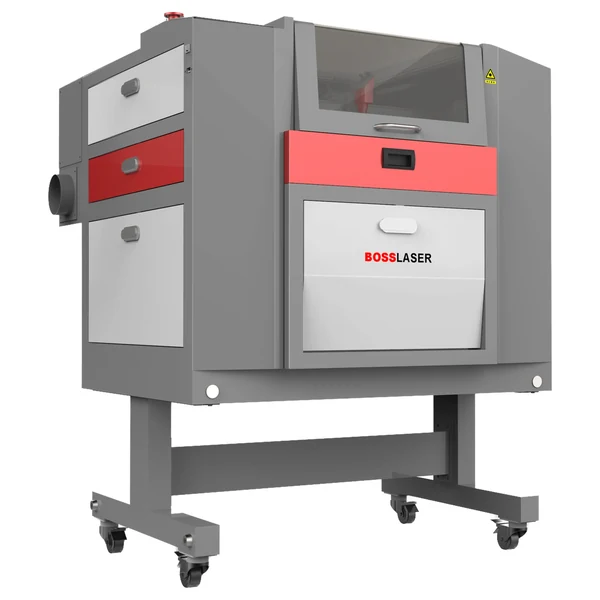
LS-1420 rotary package
Where most drinkware work can start. Tumblers, glassware and mugs on the rotary, plus signs, patches and small goods on the flat bed.
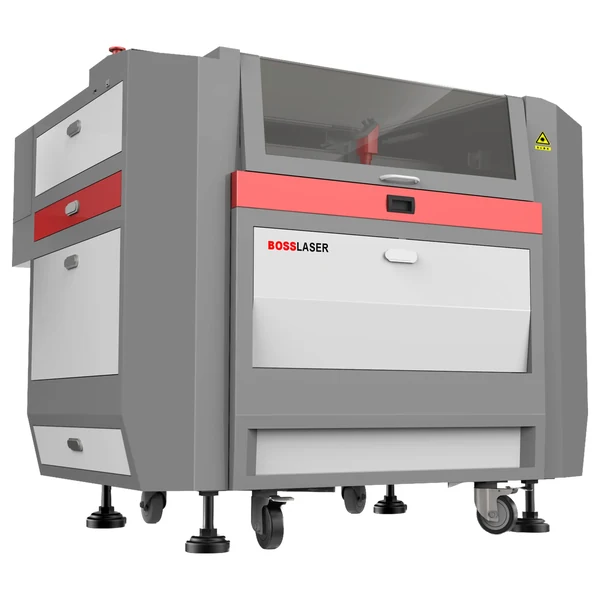
LS-1630 rotary package
More bed for flat engraving and batches, with the same rotary work. The step up when the LS-1420 bed runs out.
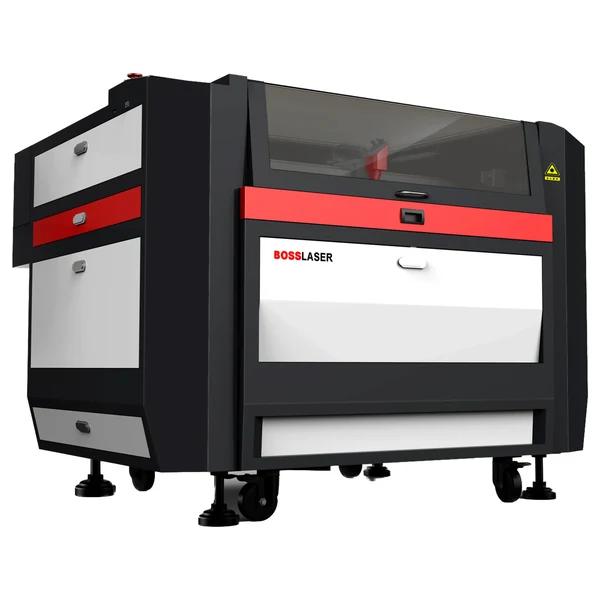
LS-2440 rotary package
Large-format engraving for signage, awards and panels, with room for long round pieces on the rotary.
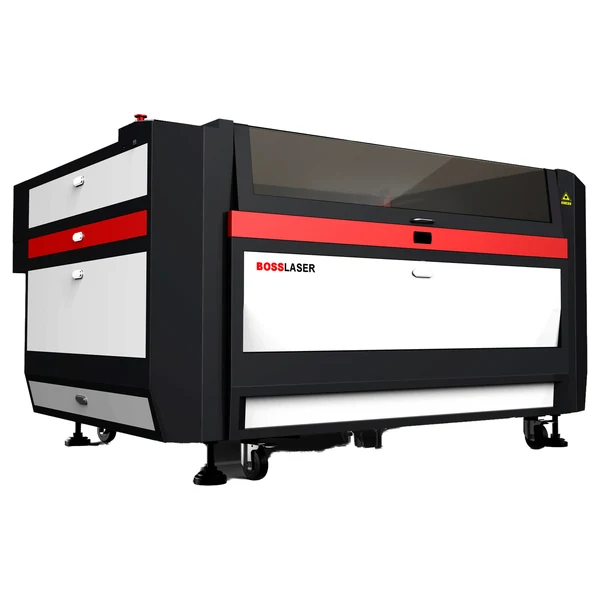
LS-3655 rotary package
The biggest LS bed. Full-size panels and production batches on the flat, round work on the rotary.
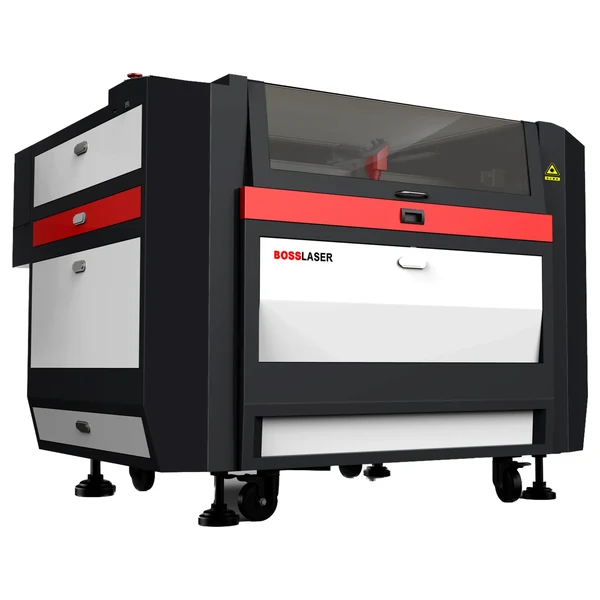
HP-2440 rotary package
High-power CO₂ for shops that engrave and cut thicker non-metals, and run rotary work on the side. Chiller included.
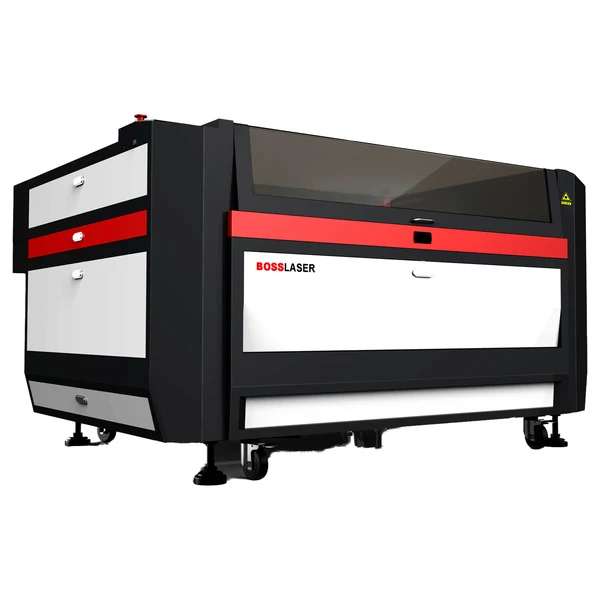
HP-3655 rotary package
The larger HP frame for big panels and production. More power than rotary engraving needs, so buy it for the flat work.
Questions buyers ask before engraving round work.
For technique (artwork, diameter, focus on the curve), see Personalization. If you also cut a lot of flat sheet, see Laser Cutter With Rotary.
QCan a CO₂ laser engraver with a rotary engrave stainless tumblers?
Powder-coated ones, yes. The laser takes the coating off where the artwork goes and leaves the metal showing. That’s the kind of tumbler in the photos on this page.
Bare, uncoated stainless is a different job. A CO₂ laser can’t mark it directly; the workaround is a marking compound. For a permanent mark on bare metal, use a fiber marker with a rotary. See the bottom of this page.
QWill mugs with handles and tapered tumblers work on a rotary?
Mugs with handles work on the PiBurn V roller; Boss’s listing names them. Tapered tumblers, pieces that are wider at one end, and heavier objects hold better in the PiBurn Grip 2, which clamps one end in a chuck.
QDo I need both the roller and the Grip?
Not to start. If your round work is mostly straight-walled tumblers and glassware, the PiBurn V roller covers it.
Add the Grip 2 when you take on tapered, handled or heavy pieces, or anything that slips on rollers. Both fit the same machines, so you can add the second one later.
QDoes rotary engraving need a more powerful laser?
No. Engraving a tumbler or a glass depends on speed, resolution and focus on the curve, not wattage. More power buys cutting capacity and speed on flat work, so choose the size for everything else you’ll run on the machine.
QWhat’s in a Boss rotary package?
One of the machines above plus a PiBurn rotary. Each package has its own page where you choose the machine’s options and the rotary (the PiBurn V roller, the Grip 2 chuck, or both), see the full specs, and add everything to Boss’s cart in one step.
The “from” price on each card is the machine in its base configuration with the PiBurn V roller.
QWhat trips people up when a rotary first arrives?
Two things. The first is a rotary from the wrong compatibility group; buying it with the machine takes care of that. The second is the rotary not being turned on in the software, which is a quick settings check on day one.
QWhat’s the smallest Boss laser engraver that takes a rotary?
The EVO desktop has its own EVO Rotary ($247 on Boss’s store). The LS-1420 is the smallest full-size Boss machine that takes the PiBurn V and Grip 2.
Engraving bare metal, or only small drinkware?
The CO₂ machines above engrave coated, glass, wood and other non-metal surfaces. For bare metal you need a fiber marker, and Boss’s markers take a rotary too.
FM fiber marker + rotary
For permanent marks on uncoated stainless, brass, rings and round metal parts. A CO₂ laser can’t mark bare metal directly. FM-D desktop from $7,997; FM-Station from $9,597.
EVO desktop + EVO Rotary
The EVO takes its own EVO Rotary ($247 on Boss’s store). It’s a smaller desktop machine with a smaller bed, and it can fit if small round work is all you do.
Not sure which machine or rotary fits?
Tell the Spec Desk what you engrave, how many, and what else runs on the machine. A person at Boss narrows it down with you.