
Every machine Boss builds
Boss Machines
Four families, and the job decides which one you’re in: CO₂ for non-metals, fiber markers for bare metal, UV for fine glass and heat-sensitive parts, fiber cutters for sheet metal. Start from the work, not the model name.
CO₂ · 10.6 µm
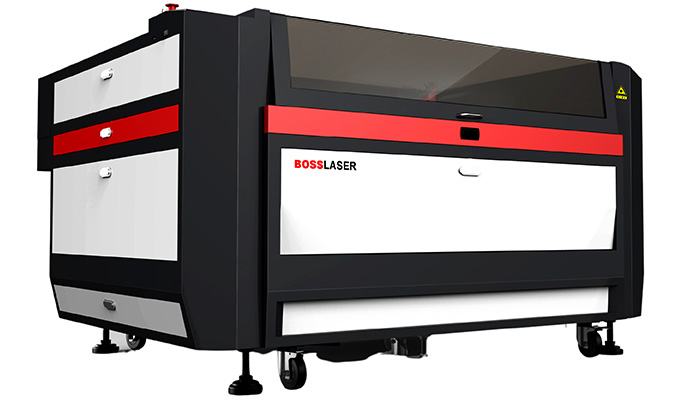
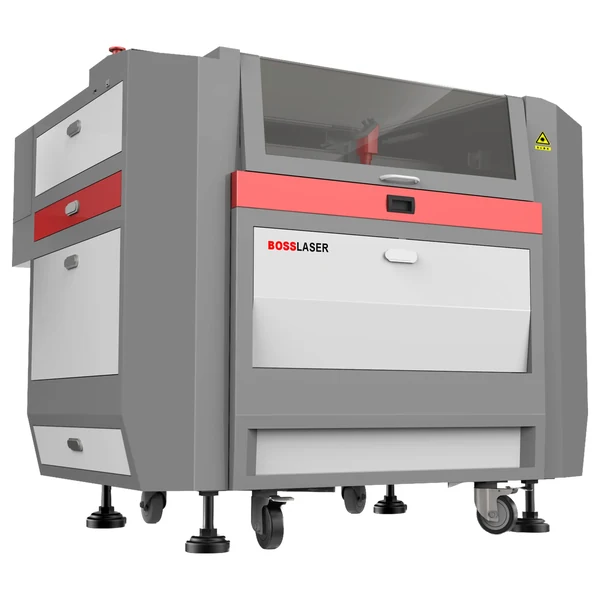
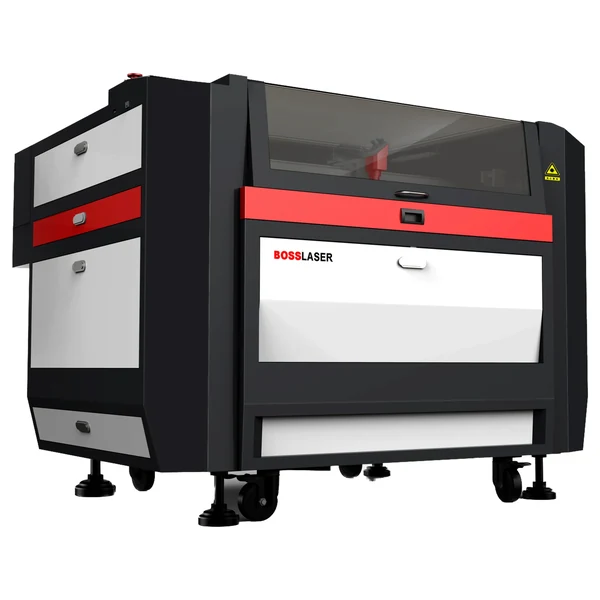
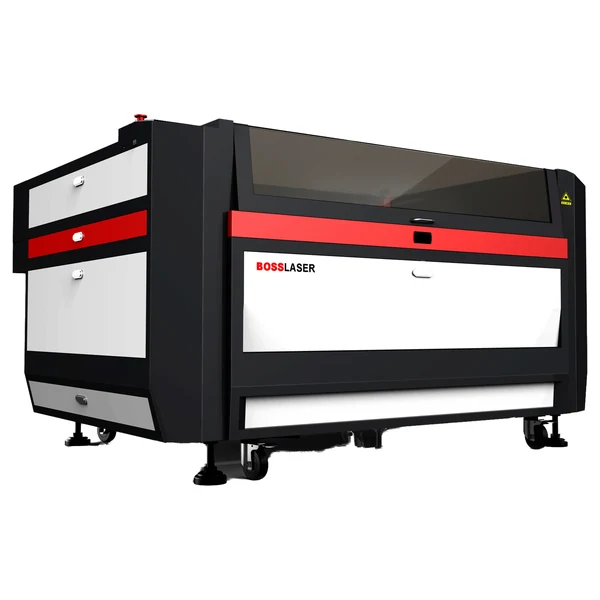
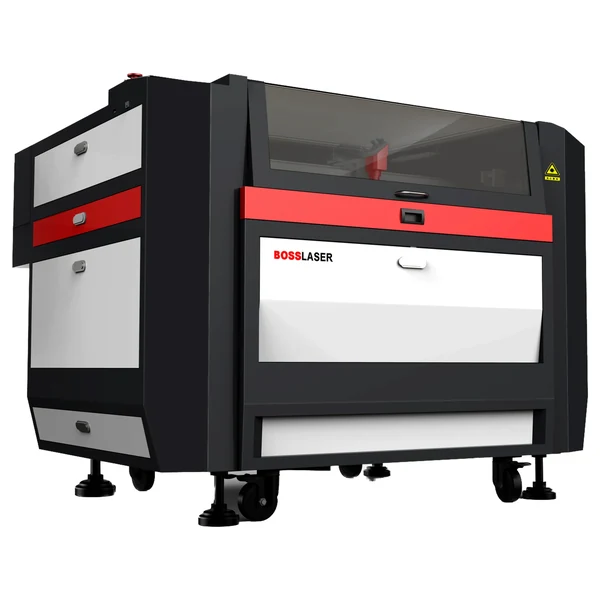
CO₂ cutters and engravers.
The family most shops start in. LS Series and EVO Desktop and HP Series each have their own page.
A CO₂ laser cuts and engraves non-metals — wood, acrylic, leather, paper, fabric — engraves glass and stone, and marks metals that have been pre-treated or coated. It does not cut bare metal.
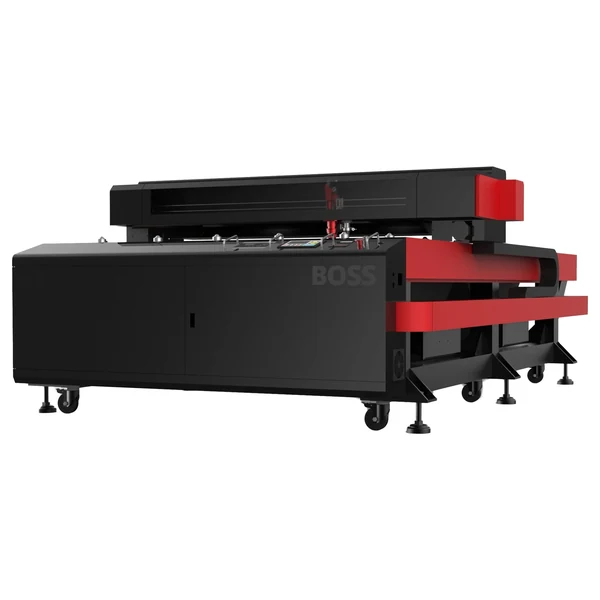
The ladder is EVO (desktop) → LS (the standard platform, four bed sizes) → HP, which carries the same 155 W tube as a large LS but ships with a metal-cutting head, and that head is what lets it cut thin sheet metal, about 18-gauge stainless.



Fiber markers · ~1,064 nm
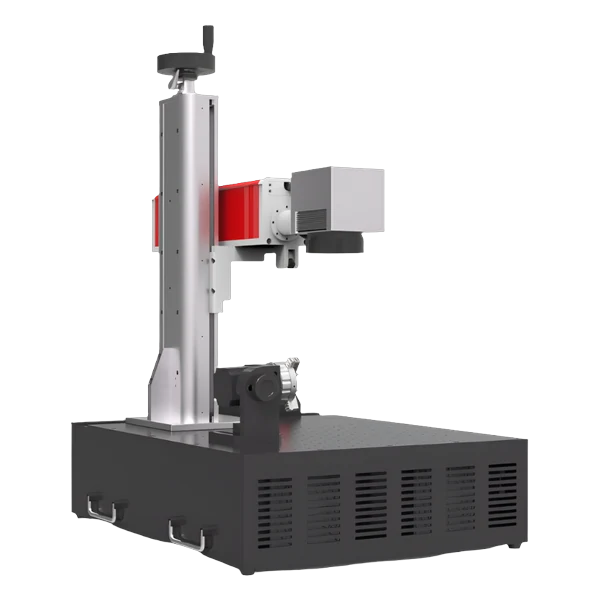
Marking metal directly.
No coating, no spray: a fiber marker changes the metal itself. The markers page compares all three.
Fiber markers mark, they don’t cut. The FM machines run at about 1,064 nm and work on bare steel, stainless, aluminum and other metals. Boss sells the FM-D at 30 W and the FM-Station at 30 W, 50 W or 100 W.
The CO₂ Galvo RF Marker sits here by job rather than by wavelength: it is a galvo marker like the others, but at 10.6 µm, so it marks the organics a CO₂ laser suits rather than bare metal.


UV markers · 355 nm
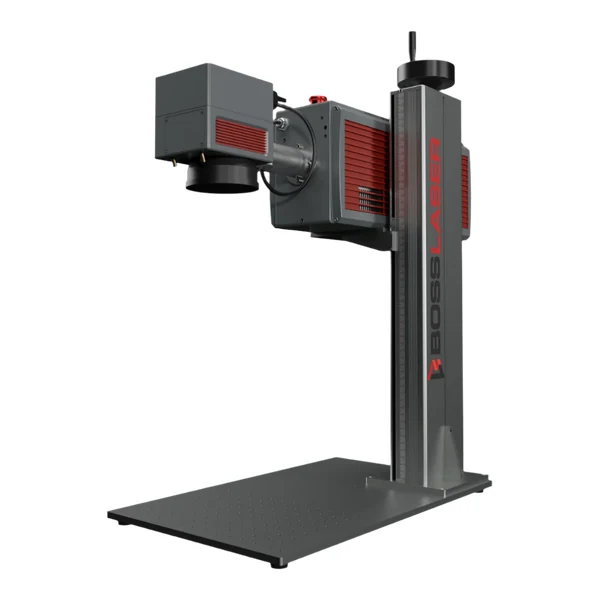
Cold marking.
Where CO₂ runs out on fine glass and precision ceramic. The UV page compares the two.
UV marks with very little heat, which is what fine glass, precision ceramic, heat-sensitive plastics and electronics need — less thermal stress, less chipping, finer detail. Both are markers, on a marking field about 4.3″ square.

Fiber cutters · kilowatt class
Cutting sheet and tube metal.
A different class of machine, and a different order of price. The fiber cutters page covers how to choose one.
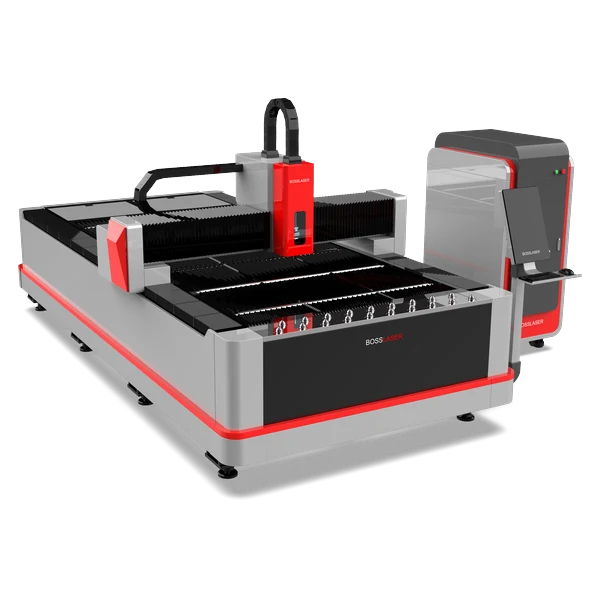
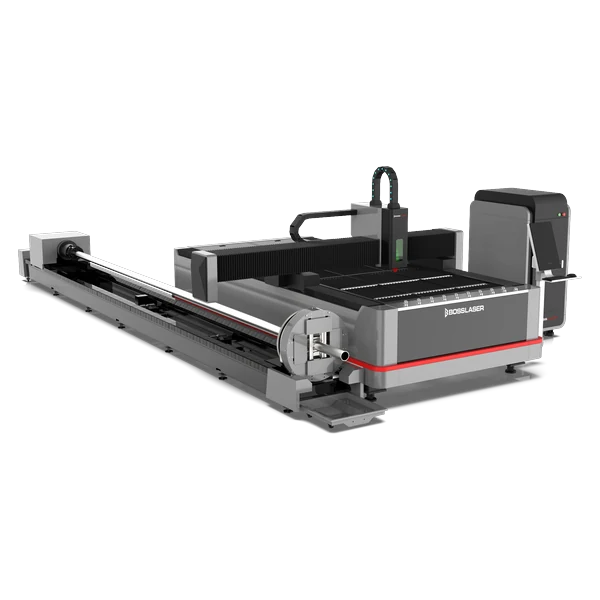
The FC family cuts metals only. Two decisions drive everything: the sheet size you need to lay down, and the power, which sets how thick you can cut and how fast. Choosing a fiber laser cutter walks through both, and Metal cutting covers the work itself.
The FC-FlexCUT is the bridge machine: a CO₂ source and a fiber cutter on one platform. Tube and pipe are their own machines, below.
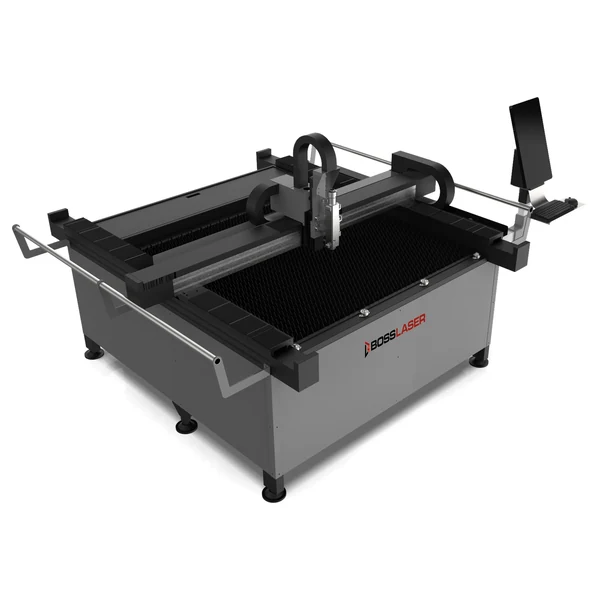

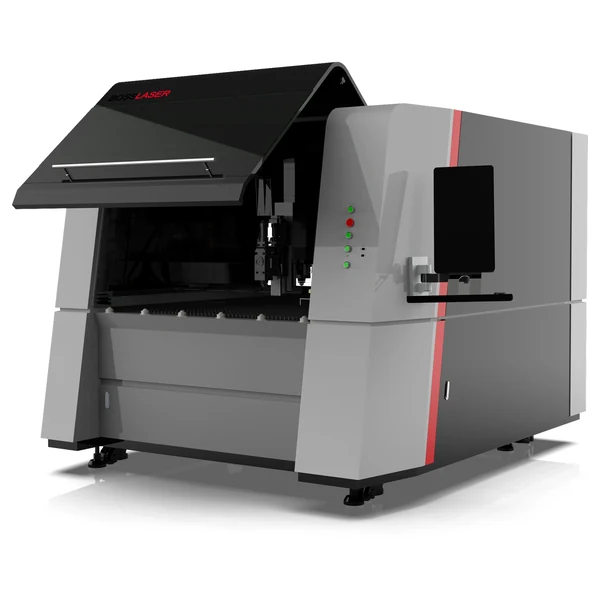
FC-AccuCut
- Sheet
- X=51.2″, Y=51.2″, Z=3″ (1,300 × 1,300 mm)
- Laser
- 2 kW or 3 kW
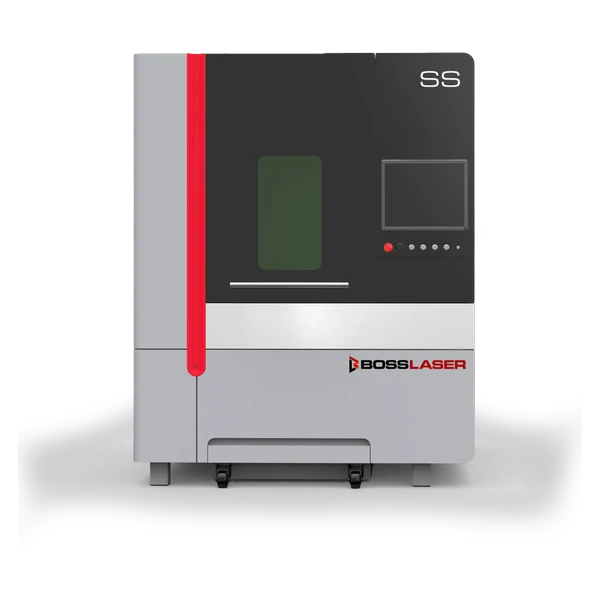
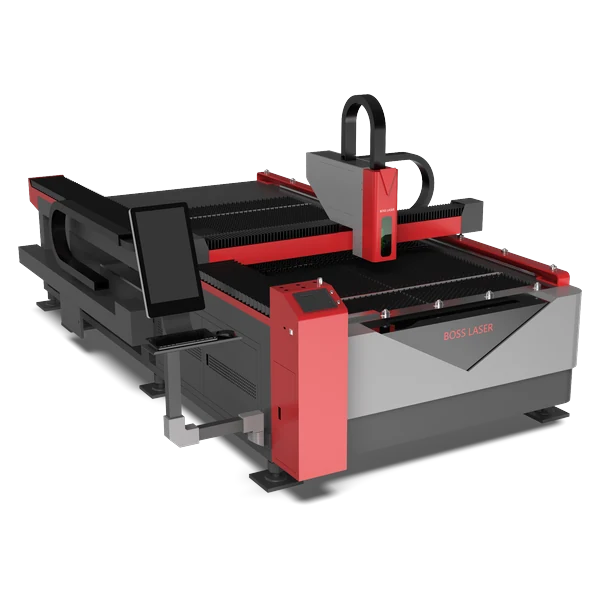
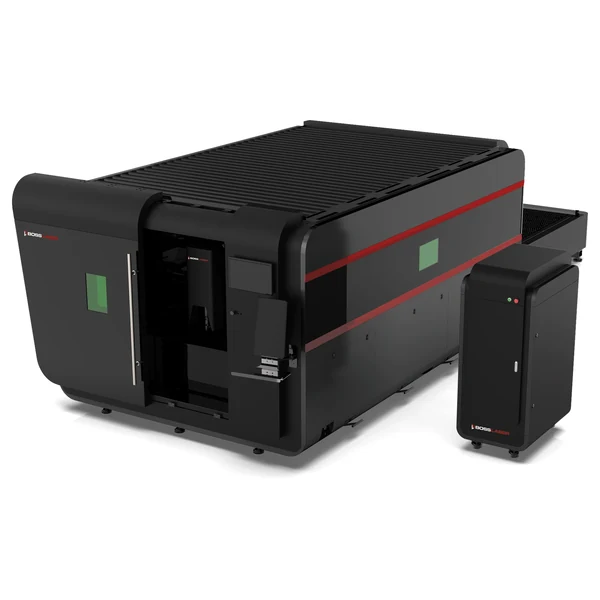
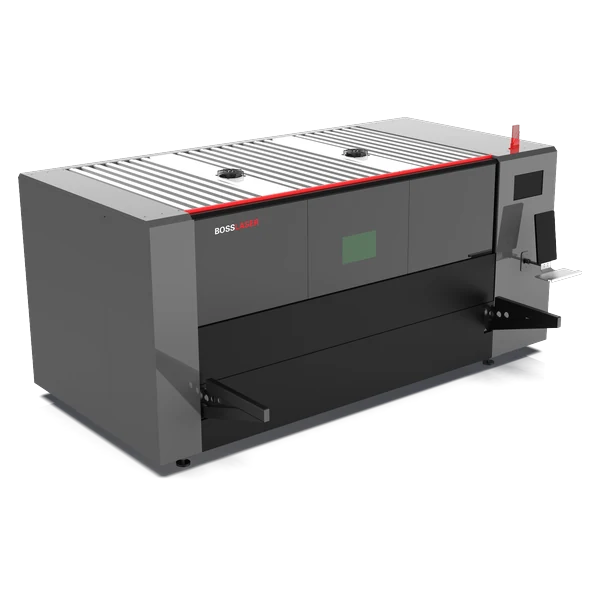
FC-Elite MaxCUT
- Sheet
- 59 × 118″ or 1,500 mm × 3,000 mm
- Laser
- 3 kW

Mega Cut
- Sheet
- 472.44” × 98.43”
- Laser
- 3 kW, 4 kW, 6 kW, 12 kW or 20 kW

Questions
Choosing between families.
The questions that come before a model number.
Where should I start?
With the material and the biggest part you’ll run, not with a model. Non-metals (wood, acrylic, leather, paper, fabric) and engraving glass or stone put you in CO₂. Marking bare metal puts you in fiber markers. Cutting sheet or tube metal puts you in fiber cutters. Fine glass, ceramic or heat-sensitive parts put you in UV.
If two families could work, that’s worth a conversation — the Spec Desk starts there.
Which Boss machines cut metal?
The fiber cutters (FC) cut metal, and that’s what they’re built for. In CO₂, only the HP Series cuts metal, and only thin sheet — about 18-gauge stainless or 20-gauge mild steel — because it ships with a metal-cutting head.
The EVO and the LS do not cut metal. They mark metals that are coated or pre-treated.
What does the starting price include?
The starting price is Boss’s lowest current configuration for that machine on the Boss store. Options change it: laser power, cooling, air assist, the drive on the larger machines, a rotary, lenses.
Prices here are read from the store, and the store is always the live number. One machine shows no price because it is quoted individually.
What’s the difference between CO₂ and fiber?
Wavelength, and what each one can be absorbed by. CO₂ (10.6 µm) is absorbed well by organics — wood, acrylic, leather, glass surfaces. Fiber (~1.06 µm) is absorbed by metal, which is why it marks and cuts metal and why it is not the tool for most non-metals.
Fiber vs CO₂ goes through it properly.
Not sure which family you’re in?
Tell the Spec Desk the material, the part size and what the mark or cut has to do. That conversation is shorter than this page.
Specs are Boss’s published product-page spec tables (verified 2026-07-30). Starting prices and buy options are read live from the Boss store, which is where current pricing lives.