
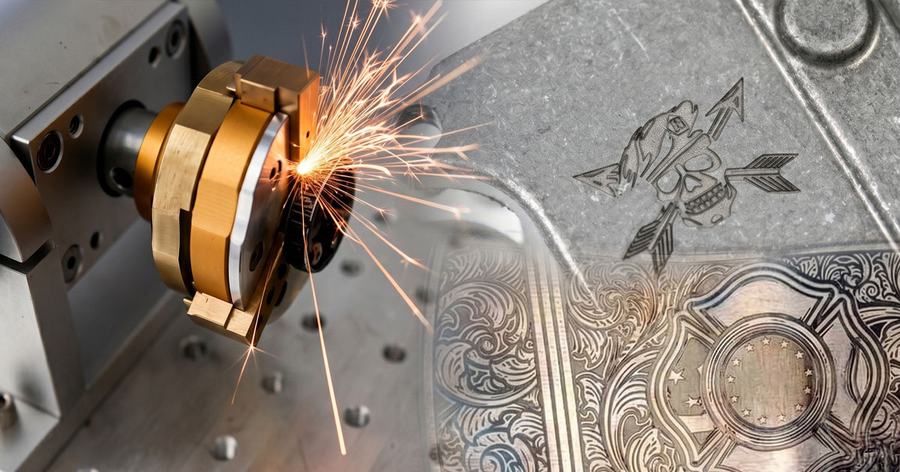
Match the marking method to your metal, contrast, and permanence requirements.
Fiber and UV markers create permanent marks without consumables. The right approach depends on the metal, the contrast you need, and whether the mark must survive wear or corrosion.
Steel, stainless, anodized aluminum, brass, titanium, and coated metals.
Marking method, contrast, depth, cycle time, and surface durability.

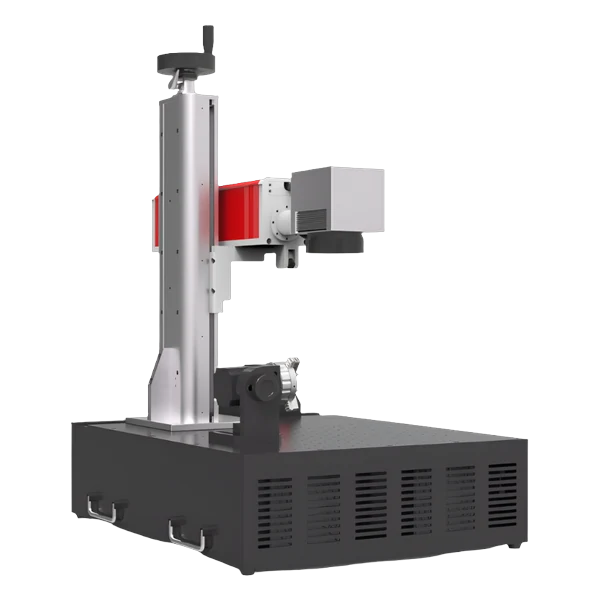
FM Desktop
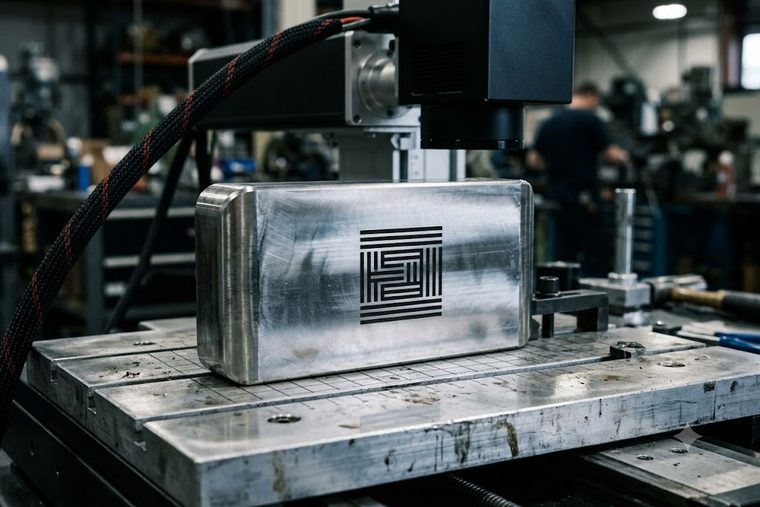
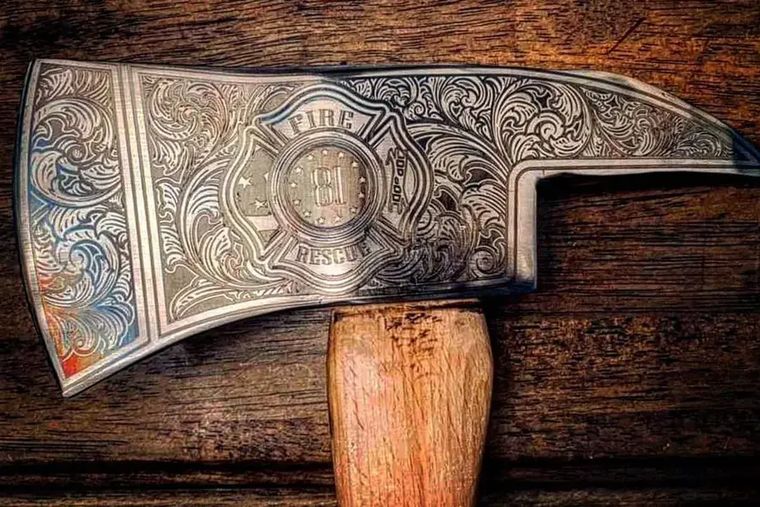
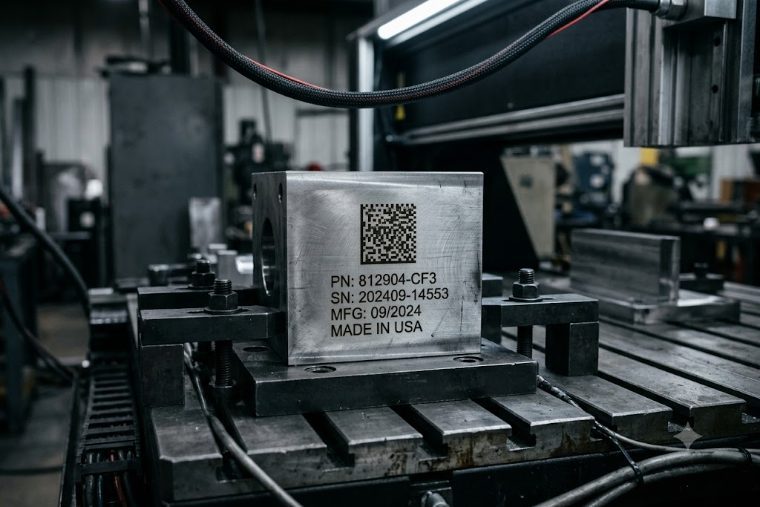
The compact entry into the FM Series — anneals, etches, and engraves bare metal directly, with no coating and no contact.
- Serial numbers, barcodes, logos & tools
- Permanent marks, no consumables
- 20–50W handles most marking & etching jobs

FM Station
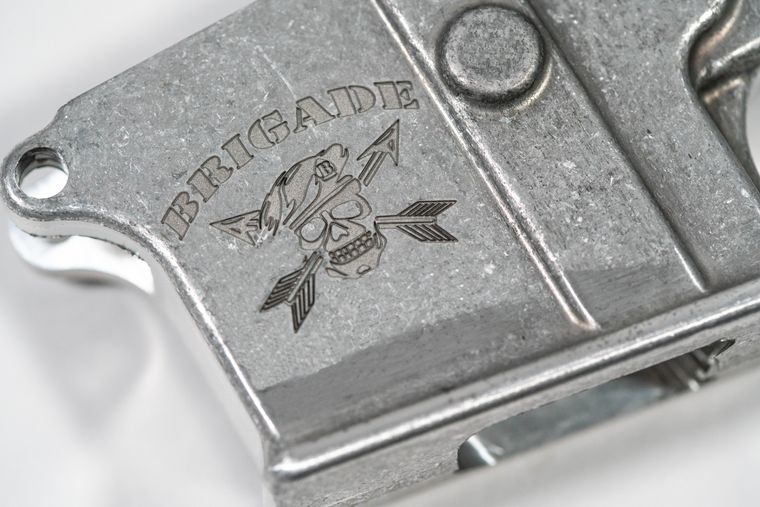
The FM Series station format for heavier production, with wattage options up to 100W for deep engraving and faster throughput.
- Step up for deep engraving & harder alloys
- Built for heavier production marking
- Marks stainless, aluminum, brass & titanium
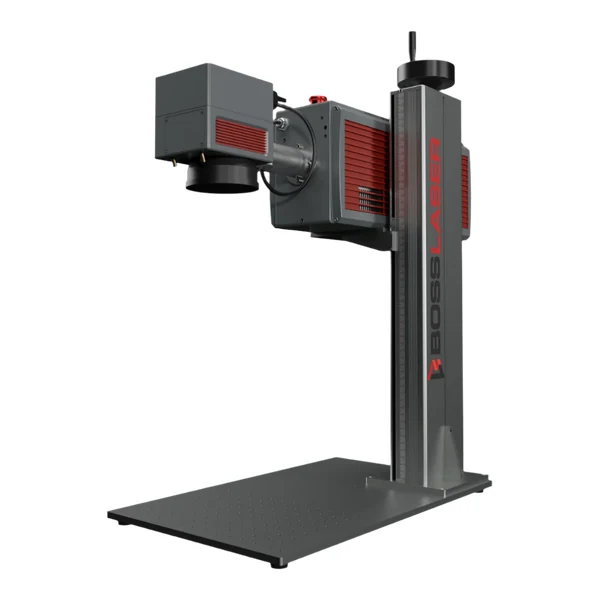
UV Markers
“Cold” marking through a photochemical reaction at roughly 355 nm — very little heat, for precise marks on sensitive parts.
- Minimal heat-affected zone
- High-precision, low-stress marks
- Common in electronics & medical work
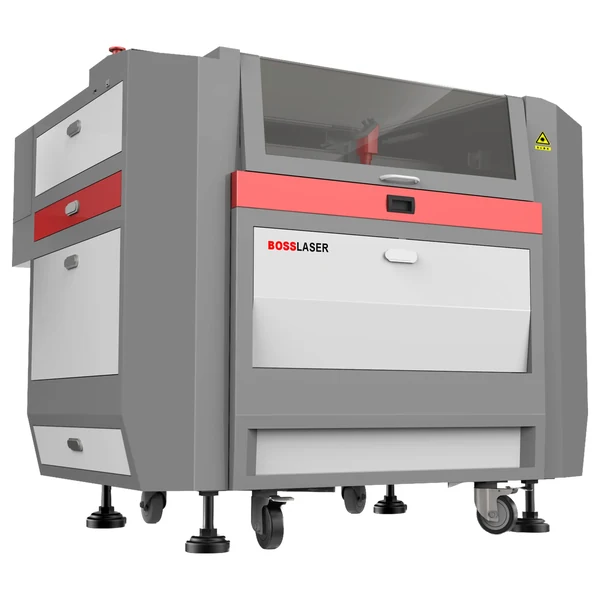
CO2 + Marking Spray
A CO2 laser can’t mark bare metal directly, but with a marking spray it bonds a permanent dark mark — the budget path if you already own a CO2.
- CerMark / LaserBond bond a durable dark mark
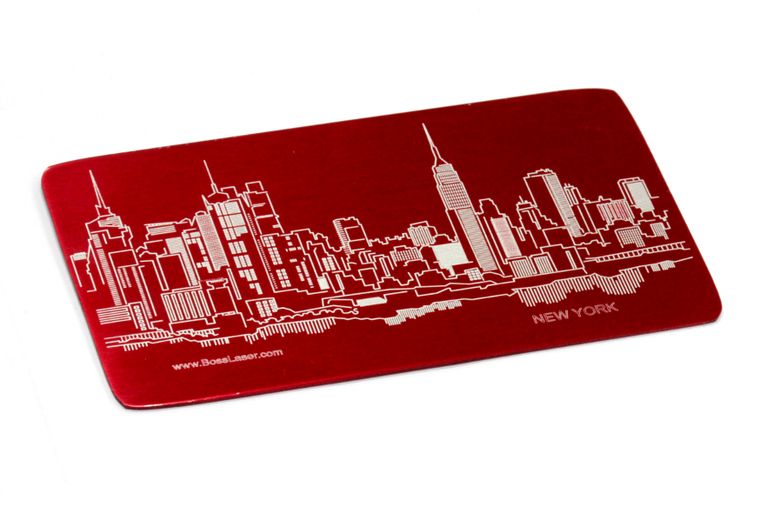
- Marks anodized aluminum directly, no spray
- Best for occasional metal marking on a CO2
How a Fiber Laser Works
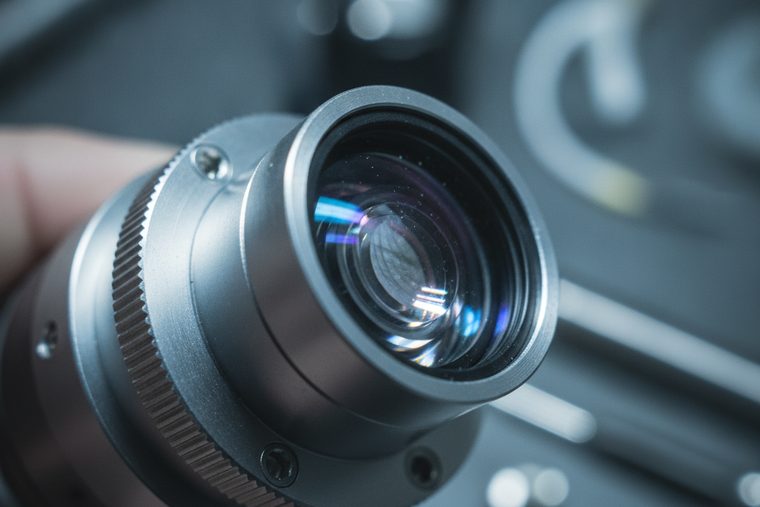
The 1064 nm beam is generated inside an optical fiber and steered by two high-speed galvo mirrors through an f-theta lens across a fixed mark field — no moving gantry. Metal absorbs this wavelength efficiently, which is why a fiber marker anneals, etches, and engraves bare metal directly, and why lens and field size set the tradeoff between part coverage and fine detail.
Cut vs Engrave
Marking lives in the surface layer: annealing changes color without removing material, etching melts a thin skin, and deep engraving removes a controlled depth over multiple passes. Cutting drives the beam all the way through the material — that is kilowatt-class fiber-cutter territory, not a marking job. Need to cut metal instead? See Metal Cutting & Fabrication.
Metal marking FAQs
Common buyer questions.
What comes up most often before you start comparing marking platforms.
QWhat’s the difference between marking, etching, and engraving?
Marking (annealing) changes the surface color without removing material: controlled heat grows an oxide layer, usually black or dark gray, and the surface stays smooth. Etching melts a very thin top layer, leaving a fast, high-contrast mark you can feel with a fingernail. Engraving removes material to cut an actual recess — deeper, more wear-resistant, and slower, built up over multiple passes rather than one high-power hit. Choose by how much depth, contrast, and durability the part needs: anneal for clean color marks, etch for fast contrast, engrave for depth.
QCan a fiber marker mark stainless without removing material?
Yes — that’s annealing. The beam heats the surface to grow a controlled oxide layer, producing a black or colored mark that sits flush with the surface, with no recess and no material removed. Because the surface stays smooth, it’s the preferred method for medical, food, and corrosion-sensitive parts. The same oxide effect, with tuned fiber settings, is what produces controlled color marks on stainless.
QHow do I mark anodized aluminum?
On anodized aluminum a fiber laser bleaches the dye layer to a bright white mark with very little power and high speed — fast, high-contrast, and no consumables. It’s also one of the few metals a CO2 laser marks directly: the beam bleaches the colour out of the thin dyed anodic coating without removing it, giving a crisp white-frost-on-dark mark with the coating intact. Either way, run lower power and higher speed and test on scrap — too much energy cuts into the aluminum and dulls the contrast. Bare (non-anodized) aluminum is different: it needs a fiber laser or a marking spray.
QWhat lens should I use for fine detail vs large parts?
A smaller field lens concentrates the beam into a smaller spot for the finest detail; a larger field lens covers bigger parts in one pass, but with a larger spot. On a galvo marker the lens sets the mark field the mirrors can scan (see the beam-path diagram above), so lens choice is a throughput decision as much as a detail one. Match lens and field size to your part dimensions and the smallest feature you need to resolve — the lens & field size guide walks through it.
QWill a marked code survive wear and corrosion?
An annealed or deep-engraved mark resists abrasion and corrosion far better than a surface etch. Annealing leaves the surface smooth and corrosion-safe, which is why it’s the go-to on stainless and titanium; deep engraving cuts a recess that survives heavy handling and refinishing. A shallow etch, by contrast, can often be sanded or polished back — the wrong choice when a mark must be tamper-resistant. For parts exposed to wear, cleaning, or weather, choose annealing or engraving and validate the mark against your read and durability requirements.
QHow to laser engrave metal
Match the laser to the metal first. A fiber laser’s 1064 nm beam is absorbed by bare stainless, aluminum, brass, copper, and titanium, so it anneals, etches, and engraves directly with no coating; a CO2 laser only marks bare metal with a marking spray such as CerMark or LaserBond; a UV laser makes low-heat, high-precision marks on sensitive parts. Then set focus accurately, choose the mark type — anneal for color, etch for fast contrast, engrave for depth — and balance power against speed: more energy means deeper and darker, and deep engraving builds up over multiple passes. Run a small test grid on scrap of the same alloy before committing to the part. More short answers live in our engraving FAQs.
QCan you engrave stainless steel with a diode laser
You can get a mark on stainless with a diode laser, but the dependable method is a stainless marking spray or paste. On bare stainless a diode usually leaves only a faint, low-contrast surface mark and cannot anneal the steel the way a fiber laser does. For fast, consistent, dark, production-grade marks on stainless, a fiber laser is the right tool — the fiber FAQs cover more wattage and material questions.
QWhat watt laser to engrave metal
For marking and etching most metals, a 20–50 watt fiber marker is the practical sweet spot and handles the vast majority of jobs. For deep engraving or faster throughput on harder alloys, step up toward 50–100 watts. Wattage is only part of the picture — beam quality, focus, and the metal itself matter just as much. As a rule of thumb, a hobby-class diode in the single-digit-to-low-double-digit watts is for marking coated or anodized surfaces, while genuine bare-metal engraving starts with a fiber laser.
More Metal Marking FAQs → · Marking, etching and engraving compared →
Still deciding?
Talk to a Boss Laser marking specialist.
Tell us your metals, mark types, part sizes, and volume — we’ll recommend the right marking platform, wattage, and lens for the job.