
Every laser, all types
Before cutting anything new
Everyone
Machine fire procedure
Three separate lists, because the fix is different for each. Genuinely hazardous: PVC/vinyl (hydrogen chloride → hydrochloric acid), PTFE/Teflon (hydrogen fluoride), ABS (hydrogen cyanide, styrene), fiberglass and coated carbon fiber (resin fumes plus fine particulate), and anything with an unknown coating or adhesive. Just poor results: polycarbonate, polypropylene, HDPE and most foams — safe enough with good extraction, but they melt, char or catch fire rather than cutting cleanly. Hard on the machine: bare reflective metals on a CO2 laser, and adhesive-backed stock that fouls optics. Only the first list is a never; the other two are judgement calls.
The one rule that never bends
Never put PVC or vinyl in a laser. It releases hydrogen chloride, which becomes hydrochloric acid in contact with moisture — corroding your optics, rails and electronics from the inside, and attacking your eyes and airways. There is no safe power setting, no speed that avoids it, and no extraction system that makes it fine. The damage is chemical, not thermal. If you cannot identify a plastic with certainty, do not cut it.
1 · Genuinely hazardous — do not cut these.
| Material | What it releases | Why it’s a hard no |
|---|---|---|
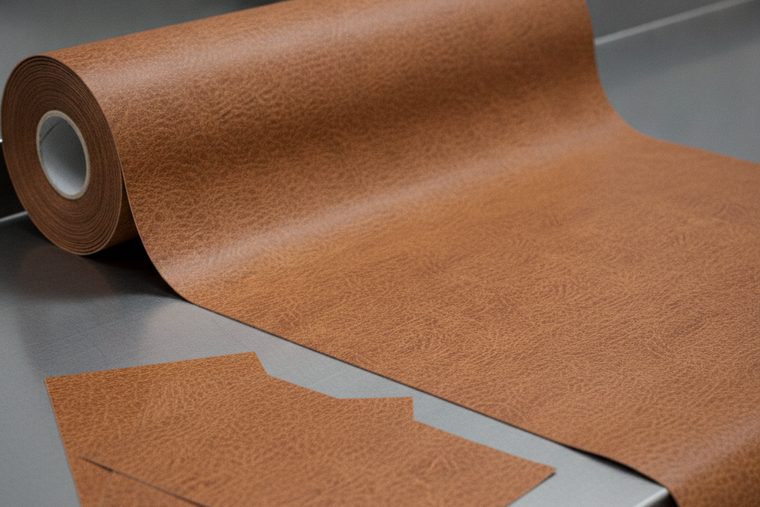
| PVC, vinyl flooring, banner material, cable insulation, blister packs, much faux leather | Hydrogen chloride → hydrochloric acid | Corrodes the machine internally and attacks airways. The canonical never. |
| PTFE (Teflon) non-stick coatings, gaskets, electrical insulation | Hydrogen fluoride and other fluorine compounds when overheated | Hydrogen fluoride is severely corrosive and toxic. Not a “with ventilation” material. |
| ABS enclosures, automotive trim, toys | Hydrogen cyanide, styrene, VOCs | Toxic decomposition products, and it melts and chars rather than cutting cleanly — it fails on both counts. |
| Fiberglass / GRP | Resin fumes plus fine glass particulate | Two hazards at once: what you breathe, and what settles in the machine. |
| Coated carbon fiber | Fumes from the resin or coating | The fiber isn’t the problem; the matrix around it is. Uncoated behaves differently but is still abrasive dust. |
| Anything chlorinated or brominated | Halogen acids | Same failure mode as PVC. If the name contains “chloro” or “bromo,” stop. |
| Unknown plastics and unknown coatings | Unknowable | You cannot assess a risk you can’t name. This is the one that catches people. |
2 · Why “no safe setting” is meant literally.
People reasonably assume that lower power, faster speed, or better extraction turns a bad material into an acceptable one. For thermal problems — charring, melting, scorching — that’s often true. For these materials it isn’t, and the reason is worth understanding:
- The hazard is chemical, not thermal. Decomposition happens because the material is being heated at all. Less heat means less of it, not none.
- Corrosion is cumulative and invisible. Acid attacks optics, rails, bearings and electronics gradually. By the time you see the symptom, the damage is distributed through the machine.
- Extraction moves fumes; it doesn’t neutralise them. It protects the room, not the inside of the machine the fumes just passed through.
- Residue outlives the job. Deposits keep reacting after the cut finishes, including overnight.
Which is why this is framed as a rule rather than a risk assessment. Rules are easier to follow correctly under time pressure, and time pressure is exactly when someone reaches for an unlabelled offcut.
3 · Not dangerous — just disappointing.
These get lumped onto “do not cut” lists, and that’s imprecise. They’re not in the PVC category. They simply produce poor results, and with adequate extraction the decision is about quality rather than safety:
| Material | What actually happens | Reasonable response |
|---|---|---|
| Polycarbonate | Absorbs 10.6 µm strongly at the surface, so it discolours, yellows at the edge and burns rather than cutting cleanly. Gets worse fast with thickness. | Thin sheet only, if at all — or use acrylic instead. Full page → |
| Polypropylene | Melts rather than vaporising, so edges slump and re-weld behind the beam. | Cuttable with patience on thin stock; expect a melted edge, not a crisp one. |
| HDPE / polyethylene | Melts readily and can sustain a flame. | Generally not worth it. Never leave it running unattended. |
| Most foams | Highly variable — some cut beautifully, some ignite quickly. Polystyrene foam in particular is a fire risk. | Identify the specific foam first. Treat fire as the primary risk, not fumes. |
The distinction matters practically: for these, “turn the power down and speed up” is a legitimate strategy. For the section 1 list, it is not.
4 · Hard on the machine.
| Material | The problem |
|---|---|
| Bare reflective metals under CO2 | 10.6 µm mostly reflects off polished metal, and that energy has to go somewhere — including back into the machine. This is a wavelength mismatch, not a material fault; the same metals are routine on a fiber laser. More → |
| Adhesive-backed stock | Two problems: adhesive vaporises and deposits on optics, and the adhesive layer is frequently vinyl — which puts it in section 1 without the label telling you. |
| Anything abrasive or dusty | Particulate settles on optics and in rails. Not a health emergency, but it degrades cut quality steadily and quietly. |
5 · How to identify an unknown material.
This is the part that actually prevents the accident, and the source article omitted it entirely. In order of reliability:
- Ask the supplier for a data sheet. Unglamorous and completely reliable. A supplier who can’t tell you what they sold you has told you something useful.
- Check the recycling code. PVC is resin code 3 — that alone rules out a lot. Acrylic is often marked PMMA; polycarbonate PC; acetal POM.
- Be suspicious of specific product categories. Faux/pleather upholstery, vinyl banner and sign material, some flooring and wall covering, cable insulation, blister packaging, and cheap “leather-look” sheet are all commonly PVC.
- Treat mystery offcuts as unknown. The bin of unlabelled scrap is where this goes wrong. If it isn’t labelled, it isn’t identified.
About the “burn test” PRO
You’ll find the copper-wire flame test (green flame indicates chlorine) recommended online. It does work in principle, but it means deliberately burning an unidentified plastic — which is the exact exposure you’re trying to avoid, just outside the machine. If you use it at all: tiny sample, outdoors or under proper extraction, never as a substitute for asking the supplier. A data sheet is free and definitive.
6 · If you think you’ve already cut something you shouldn’t have.
It happens, usually with adhesive-backed or mystery stock. Sensible response:
- Stop the job. Don’t finish the sheet to avoid wasting it — that reasoning is how a small exposure becomes a large one.
- Leave extraction running well after the cut ends, and ventilate the room before spending time in it.
- Inspect and clean the optics. Residue keeps working after the job stops; lens and mirror surfaces are where it shows first.
- Check for that sharp acidic smell in the enclosure over the next day or two. It’s a strong hint that residue is still present.
- Write down what it was and where it came from so the same offcut doesn’t reappear in six months.
One suspected exposure is not a catastrophe. A habit of cutting unidentified material is.
7 · The standing rules that apply to everything.
- Extraction runs whenever the laser runs. Even on “clean” materials — wood smoke and acrylic vapour are not things to breathe.
- Air assist is a fire-safety feature, not only a quality one. It suppresses flame at the cut and keeps combustion products off the lens.
- Never leave a running machine unattended. Nearly every laser fire is a material that started to flame while nobody was watching.
- Know where the extinguisher is, and that it’s rated for the fire you might have.
- Keep the bed clean. Accumulated offcuts and debris under the work are excellent kindling.
Not sure about a specific material?
If you’re evaluating a material for production and can’t get a clear answer, ask before you cut it. It’s a routine question and a fast one. Ask a specialist → — or work through the material pages in this cluster.
8 · FAQs
Frequently asked
What Must Never Go in a LaserQWhat should never be laser cut?
PVC and vinyl above all — hydrogen chloride becomes hydrochloric acid, which corrodes the machine and harms you. Also PTFE (hydrogen fluoride), ABS (hydrogen cyanide and styrene), fiberglass and coated carbon fiber, any chlorinated or brominated plastic, and anything you can’t identify.
QWhy can’t you cut PVC?
It decomposes under the beam into hydrogen chloride, which combines with airborne moisture to form hydrochloric acid — corroding optics, rails and electronics from the inside and attacking your airways. No power setting or extraction arrangement makes it acceptable, because the hazard is chemical rather than thermal.
QHow do I tell if something is PVC?
Recycling resin code 3, or a supplier data sheet — the reliable route. Be suspicious of faux leather, vinyl banner material, some flooring, cable insulation and blister packaging. If you can’t establish it with certainty, don’t cut it.
QIs polycarbonate on the never list?
No — it’s a quality problem rather than a safety one. It absorbs 10.6 µm strongly, so it discolours, yellows at the edge and burns instead of cutting cleanly, and it worsens quickly with thickness. Safe enough with proper extraction; just usually not worth it when acrylic is available.
QDoes extraction make bad materials safe?
No. Extraction protects the room; it doesn’t protect the inside of the machine the fumes just travelled through, and it doesn’t neutralise corrosive products. It’s necessary for every material and sufficient for none of the section-1 list.
9 · Related in this series.
Part of Materials & Safety:
- Which plastics cut well — the positive version of this list
- Polycarbonate — the most common disappointment
- Acrylic — what to use instead, most of the time
- Kapton, Mylar, cork and paper — thin stock and fire risk
Keep exploring
One idea leads to the next.
Knowing how a material behaves under the beam is most of the job. Follow the rest of the series, or talk it through with someone who runs these systems.