
A plain-language explanation of how a focused beam leaves a permanent mark — and how engraving differs from etching, marking, and cutting.
Short answer
Laser engraving is a marking process that uses a focused laser beam to remove or alter the surface of a material, leaving a permanent mark with no ink, tools, or contact. The beam’s heat vaporizes or changes a thin top layer, so the design becomes part of the material itself — it won’t rub off or fade like print. It works on wood, acrylic, leather, glass, and, with the right laser, metal and plastic, which is why it is used for everything from personalized gifts to industrial part numbers. Strictly, engraving removes material to form a recess; the related terms etching, marking, and annealing describe shallower or color-change versions of the same idea. The result is fast, repeatable, and highly detailed.
How laser engraving works.
A laser engraver focuses a beam of light to a fine point and moves it across the material under computer control. Where the beam lands, its concentrated heat vaporizes or alters a thin surface layer, leaving a mark exactly where the design says it should be. For images and text the beam rasters — sweeping back and forth like an inkjet head — building the mark line by line. Because the mark is burned or cut into the material rather than printed on top, it is permanent.
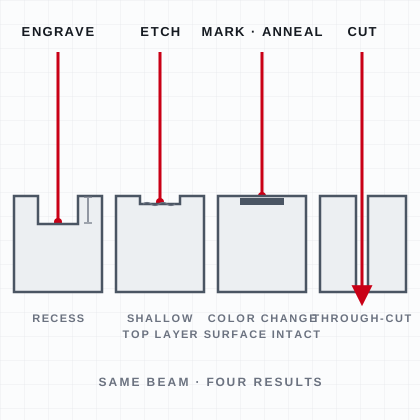
Engraving vs. etching, marking, and cutting.
- Engraving removes material to cut a recess you can feel — the deepest, most wear-resistant mark.
- Etching melts or fractures a very thin top layer for a shallow, high-contrast mark (for example, frosted glass).
- Marking / annealing changes the surface color without removing material — common on metal with a fiber laser.
- Cutting drives the beam all the way through to separate the part, rather than marking the surface.
The right term depends on depth and material, but they are all the same core idea: focused light doing the work.
What laser engraving is used for.
Because the mark is permanent and needs no consumables, laser engraving spans hobby and industry alike: personalized gifts and drinkware, signage, awards and plaques, prototyping, and — with a fiber laser — industrial part numbers, barcodes, and traceability marks that must survive handling and wear.
Related questions
What is laser engraving?
Laser engraving uses a focused laser beam to remove or alter the surface of a material, leaving a permanent mark without ink or contact. The heat vaporizes or changes a thin layer, so the design is part of the material and won’t rub off. It works on wood, acrylic, leather, glass, and — with the right laser — metal and plastic.
How does laser engraving work?
A focused beam is moved across the material under computer control, and its concentrated heat vaporizes or alters a thin surface layer to form the mark. For images and text the beam rasters back and forth, building the design line by line. The result is permanent because it is burned or cut into the surface, not printed on it.
What is laser engraving used for?
It is used for personalized gifts, drinkware, signage, awards, and prototyping, and for industrial part numbers, barcodes, and traceability marks. Anywhere a permanent, detailed, no-ink mark is needed, laser engraving fits — from one-off custom pieces to high-volume production.
What is a laser engraving machine?
It is a device that focuses a laser beam and moves it across a material under software control to mark or cut it. Machines are grouped by laser source: CO2 for wood, acrylic, leather, and glass; fiber for metal and plastic; UV for fine, low-heat marks; and small diode units for light hobby work.
What is laser engraving / marking paper?
Laser marking paper is a coated consumable sheet used to mark materials a bare beam struggles with — you place it on metal or glass, run a CO2 laser over it, and the coating bonds a permanent dark mark to the surface. It works like marking spray in sheet form and is removed after the mark is made.
How does laser engraving work on wood?
On wood the beam’s heat chars and vaporizes the surface, leaving a darkened, slightly recessed mark. Softer woods and tight grain engrave more evenly, while hard or resinous woods and wide grain give more contrast variation. Wood is one of the most forgiving and popular materials to engrave.
Keep going
- Learn: Cutting vs. Engraving
- Related: How do you use a laser engraver? · What is a fiber laser engraver? · How do you laser engrave metal?
- Products: CO2, fiber & UV lasers