
Which laser to use, the settings that cut clean instead of charring, and how to get smoke-free edges — a practical guide from Boss Laser.
Short answer
To laser cut wood, use a CO2 laser with high power and low speed so the beam burns cleanly through the board, with air assist on to reduce flare-up and charring. Choose flat, laser-grade material — quality plywood or solid hardwood — because cheap plywood hides glue voids that cut unevenly. Thicker stock needs more power or multiple passes, and you should always run a test on scrap to dial in the settings. Wood is combustible, so run exhaust, keep a clear bed, and never leave the laser unattended. A small dancing flame at the cut is normal; a steady flame is not.
Use a CO2 laser and the right wood.
Wood is one of the best and most popular materials for a CO2 laser. The 10.6 µm beam is readily absorbed, burning a narrow line through the board. Material quality matters more than people expect: laser-grade plywood is made without the glue voids and gaps found in cheap construction ply, which cut unevenly and flare. Solid hardwoods cut and engrave beautifully; denser woods give cleaner edges and higher engraving contrast. Boss LS and HP series CO2 machines are built for this work.
Dial in settings and reduce charring.
- Use high power and low speed to cut through in one clean pass; add passes for thick stock rather than forcing one slow burn.
- Keep air assist on. It blows out flame and smoke, which means cleaner edges and less scorching.
- Set focus to the top surface for a crisp, narrow cut.
- Mask or sand to manage smoke staining. Application tape on the surface, or a light sanding after, removes the brown smoke residue around cuts.
- Run a test on scrap of the same board before committing to the full sheet.
How much power and how thick?
Power sets your speed and thickness, not whether wood cuts at all. A small diode engraver can cut thin wood slowly; a 40 W CO2 cuts up to roughly ¼″ in a pass, and higher-wattage CO2 systems cut thicker stock faster. For thick hardwood, more power or multiple passes beats one very slow pass that chars the edge. Because wood burns, run exhaust, keep the bed clear of debris, and never run a wood job unattended.
Related questions
How do you laser cut wood?
Use a CO2 laser with high power and low speed and air assist on, so the beam burns cleanly through the board. Choose flat, laser-grade plywood or solid hardwood, set focus to the surface, and test on scrap first. Run exhaust and stay with the machine, because wood is combustible.
Can a laser cutter or laser engraver cut wood?
Yes. A CO2 laser cuts and engraves wood well, and many laser engravers can cut thin wood if they have enough power. The difference is wattage: higher power cuts thicker stock faster, while a low-power diode is limited to thin wood and slower passes.
Can you cut wood with a diode laser?
Yes, within limits. A diode laser can cut thin wood (often with multiple passes) and engrave it well, but it cuts slower and tops out at thinner stock than a CO2 laser. For regular or thicker wood cutting, a CO2 laser is the better tool.
How many watts do you need to laser cut wood?
It depends on thickness. A small diode handles thin wood slowly; a 40 W CO2 cuts up to about ¼″ in a pass, and higher-wattage CO2 systems cut thicker wood faster. More power mainly buys speed and thickness capacity.
How long does it take to laser cut wood?
Anywhere from seconds to many minutes per part, depending on thickness, power, and design complexity. Thin plywood shapes cut quickly; thick hardwood or detailed engraving takes longer. Your software will estimate the job time once settings are set.
How much does it cost to laser cut wood?
The material is inexpensive, and the main running costs are electricity and consumables, so cost per part is usually small. The bigger factor is machine time for detailed or thick work. See our guide on laser cutter cost for machine pricing and running costs.
Keep going
Laser Vaporization Cutting
One of the three ways a laser cut actually happens.
Read the article →FAQHow do you use a laser cutter?
See the answer →FAQWhat materials can a laser cutter cut?
A CO2 laser cuts wood, acrylic, leather, paper, and fabric; a fiber laser cuts metal.
See the answer →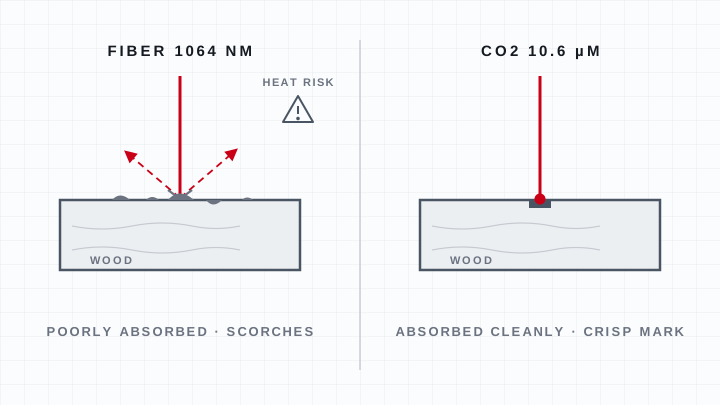 FAQ
Can a fiber laser engrave wood?
Technically yes, but it's not recommended.
See the answer → Machines
LS Series CO2 lasers
Boss's floor-standing CO₂ platform for wood, acrylic, leather, glass and stone.
See the machines →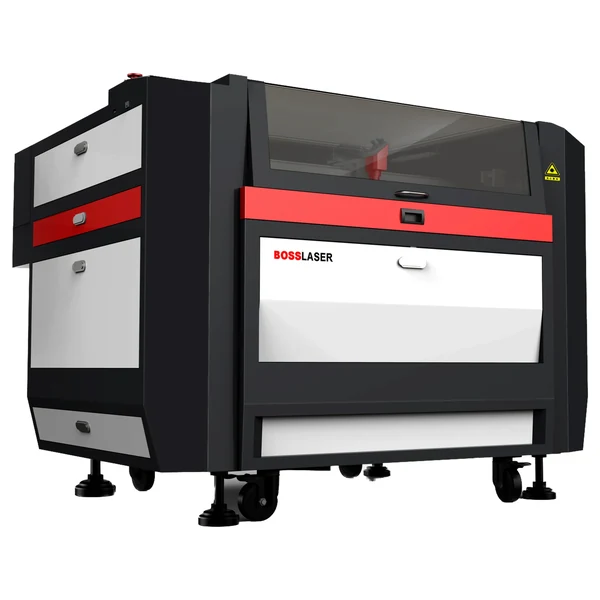 Machines
HP Series CO2 lasers
The CO₂ platform that also cuts thin sheet metal.
See the machines →