Boss Team Tech Support: Knowledge Base & Applications Hub

Applications / Lasers for Schools, Government & Institutions

Applications

Lasers for Schools, Government & Institutions

Safety, facility readiness, and the procurement path — POs, tax-exempt purchasing, and grant funding. For an institution the machine is usually the easy part; the money and the calendar are what decide whether the purchase happens.

Best-fit technology

  • Usually CO₂ — sized to the room and the class rotation, not to the biggest project someone can imagine.
  • Facility readiness decides the install: power, air assist, and a fume plan (venting or filtration).
  • The quote comes first — Perkins, grants and POs all ask for an itemized quote before funds move.

For an institution, the machine is usually the easy part.

A classroom laser is rarely a hard technical decision — a mid-power CO₂ covers most curricula. What decides whether the purchase actually happens is the money path, the budget calendar, the building, and how students will be supervised on it.

Common starting question
How do we pay for this, and what does the building need? See the money path →
Who this is for

K–12 CTE and STEM programs, makerspaces, colleges and universities, and government or military facilities.

Key variables

Student safety and supervision, ventilation and power, the funding source, and the fiscal calendar.

The one thing worth knowing before anything else

The quote is upstream of the money. A Perkins application, a grant submission, and a purchase order all typically require a written, itemized vendor quote before the funds can be committed. So the first move is not choosing a machine — it is getting a quote you can attach to a request. Boss provides formal itemized quotes, and getting one costs nothing and commits you to nothing.

Best fit

Usually a CO₂ system sized to the room and the curriculum — with facility readiness (power, air, ventilation) settled before the machine ships.

Request a Quote

Application index

Where lasers land in an institution.

Six paths, in the order institutional buyers usually work through them — who is using it, then how it is kept safe, housed, and paid for.

University students operating a laser cutter in a campus makerspace
Colleges & UniversitiesLab and fab-shop machines for research, coursework, and student-run shops.
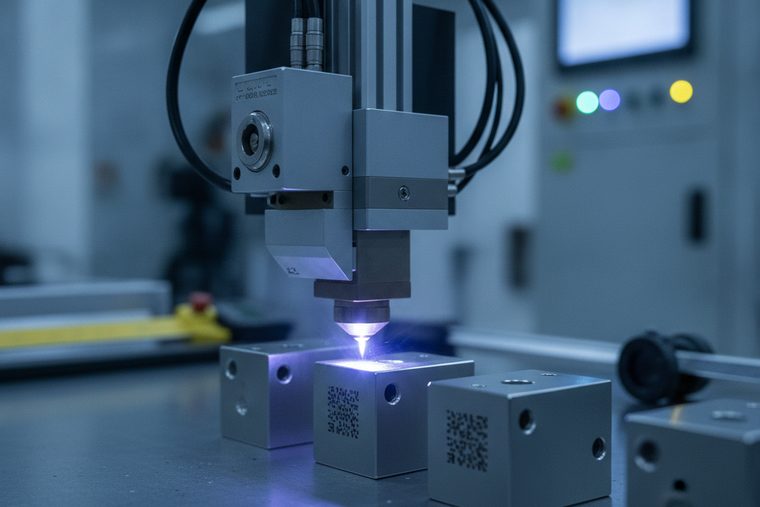
Fiber laser marking data-matrix serial codes on metal parts
Military & GovernmentMarking, identification, and fabrication systems for government facilities.
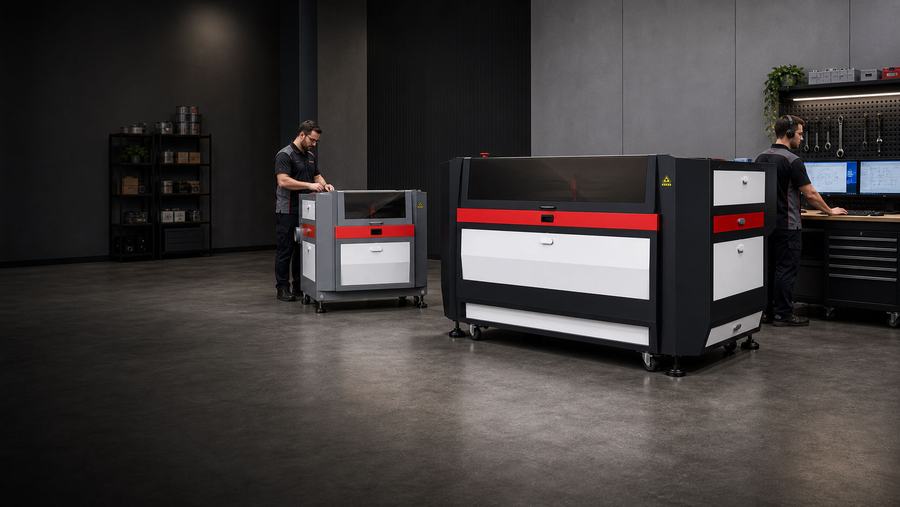
Two trained Boss laser operators running a machine together
Safety & TrainingOperator training, laser safety, and supervised student use.Read more
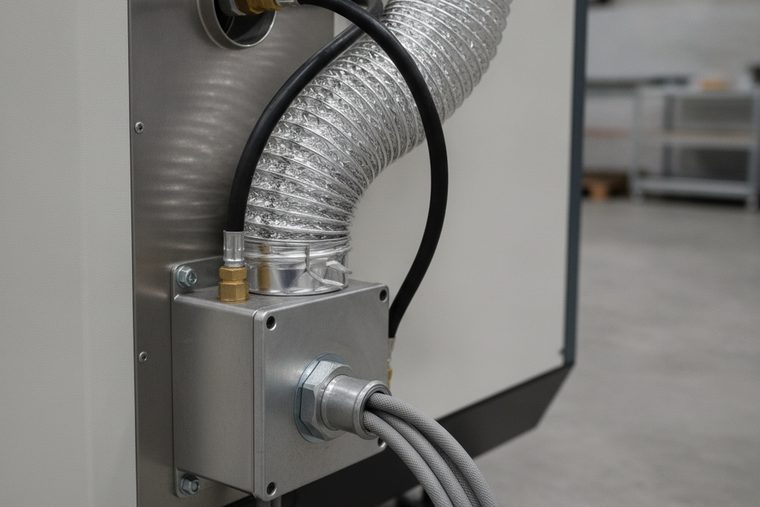
Exhaust ventilation ducting and air-assist lines on a laser installation
Facility RequirementsPower, compressed air, and ventilation or filtration planning before install.Read more
Procurement professional reviewing purchasing paperwork
PO & Tax-Exempt BuyingQuotes, purchase orders, tax-exempt paperwork, and grant timing.Read more
Common machine paths

What institutions usually end up with.

Starting points, not prescriptions — a specialist will size the machine to your curriculum, your room, and your budget cycle.

Boss EVO Desktop CO2 laser
Entry desktop · CO₂

EVO Desktop

The classroom-scale option. It fits a room that is not a shop, which is often the deciding factor when there is no dedicated space and no budget to create one.

FormatDesktop
MaterialsNon-metals
  • Engraving and lighter cutting on wood, acrylic, leather, paper
  • Realistic for a single classroom or a pilot program
  • Where programs most often start — and sometimes outgrow
Learn more →
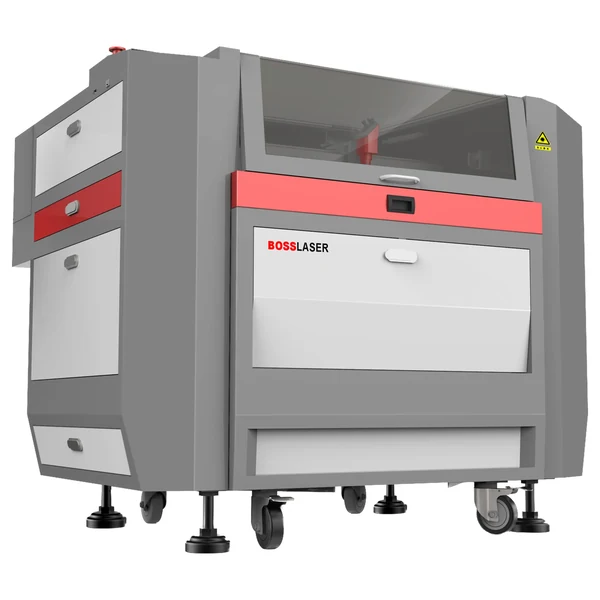
Boss LS Series CO2 laser cutter and engraver
Standard platform · CO₂

LS Series

The workhorse for a makerspace or shop class running all day. Bigger bed, more power, and built for a duty cycle a desktop was never meant to carry.

FormatFloor-standing
MaterialsNon-metals
  • Handles a full class rotation without queueing
  • Size to the sheet stock the program buys
  • The common step up when a desktop is outgrown
Learn more →
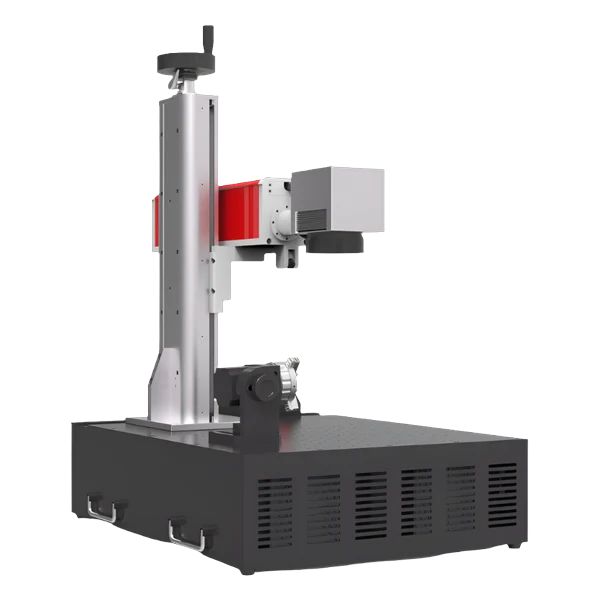
Boss FM Desktop fiber laser marker
Fiber marker · metal

FM Desktop

For advanced manufacturing and engineering pathways where students need to mark metal — part identification, serials, and tooling — which a CO₂ cannot do on bare metal.

FormatCompact desktop
MaterialsBare & coated metals
  • Permanent marks with no consumables to reorder
  • Maps to real industry practice students will meet
  • Common second machine, rarely the first
Learn more →
Filtrabox Compact X fume extractor
Facility · filtration

Fume Extraction

The purchase institutions forget to budget for. Many school buildings cannot be vented to the outside — a filtration unit is often what makes the install possible at all.

RoleFiltration
WhenNo exterior venting
  • Raise it with facilities before you request the quote
  • Belongs on the same quote, not a later one
  • Manuals and support live on the Support Hub
Filtration Support →
Procurement & funding

How institutions actually pay for a laser.

The part no spec sheet covers. Figures below are general programme mechanics, cited — always confirm current rules with your own CTE office or business office.

Work backward from the calendar, not forward from the machine

Most US public-school districts run a fiscal year of July 1 to June 30, with budgets planned and approved the preceding spring.† That single fact reorders everything: a machine you want in the fall classroom is a conversation that starts the previous winter. Grant windows and board-approval dates gate the purchase far more often than lead time does.

The funding routes, strongest first

RouteWhat it isFit for a laser
Carl D. Perkins VFederal CTE formula funding. States must distribute at least 85% to local recipients — districts, area CTE schools, community and technical colleges.The strongest, most repeatable path. New or upgraded equipment for an approved CTE program is an allowable cost.
Title IV-A (ESSA)Federal formula grant. STEM sits under Well-Rounded Education; districts receiving $30,000+ must spend at least 20% there.Secondary route. Note the 15% cap on equipment under the Effective Use of Technology allotment.
Competitive STEM grantsNSF STEM K–12 (most awards $25,000–$750,000), NSF ITEST, Dept of Ed EIR, 21st CCLC.Bigger and slower. Better suited to launching a lab or programme than buying one machine.
Foundation & corporateTypically around $1,000–$5,000 per award.Gap-filler. Named programmes open and close yearly — use a grant-finder rather than a static list.

The Perkins rule that catches people

Perkins equipment funding is for enhancing or improving a programme — it is not for routine maintenance, and not for like-for-like replacement of worn-out equipment. A laser that adds a capability the programme did not have is squarely in scope; a straight swap for a dead machine is a harder case. Some states also cap the share of Perkins funds that may go to equipment, so confirm the current limit with your state CTE office before you build the request around it.

It has been done, at scale

Cecil County Public Schools purchased six industrial-grade laser cutters, roughly $75,000 in total, for Advanced Technology CTE pathways across five high schools and the county school of technology — funded by the Carl Perkins grant.‡ Useful precedent if you are the first person in your district to ask.

The purchasing mechanics

Public schools and most non-profit institutions are sales-tax exempt and buy on a purchase order. The usual flow is: formal quote → PO issued → ship and invoice → payment on terms. Both grant applications and POs normally require that written quote up front — which is why it is the first thing to get, not the last.

What institutions askBoss
Do you accept purchase orders?Yes — Boss accepts POs from schools and institutions.
Can we get a formal itemized quote?Yes — the document a grant application or PO needs.
Is there education pricing?Yes, education pricing is available. Ask a specialist for the current figure.
How does tax exemption work?Provide your institution’s tax-exemption certificate with the order.
Is financing available?Boss offers financing through third-party partners, including ClickLease.
Do you work with government buyers?Yes — Boss works with military and government customers as well as schools.

Institution FAQs

Common buyer questions.

What administrators, CTE directors, and facilities staff ask before a laser gets approved.

Q

Is a laser cutter safe for student use?

With the right machine and the right supervision, yes — and the machine is only half of it. An enclosed system with working interlocks is the baseline; the other half is a written operating procedure, trained supervising staff, and rules about which materials are allowed in the room. That last point matters more than people expect: some common plastics, PVC and vinyl among them, release corrosive or toxic fumes when lasered and should never be in a classroom regardless of machine. Decide your approved-materials list at the same time you decide the machine.

Q

What does the building actually need?

Three things: power at the right service for the machine, compressed air for air assist, and a plan for fumes — either exterior venting or a filtration unit. The fume plan is where institutional installs most often stall, because many school buildings cannot be vented outside and nobody discovered that until the machine arrived. Bring your facilities staff into the conversation before the quote, not after, and put the extraction on the same purchase order.

Q

Can we buy this with Perkins funding?

Generally yes, if it serves an approved CTE program. New or upgraded equipment that enhances or improves a program is an allowable Perkins cost — a laser added to a manufacturing, engineering, or design pathway fits that description well. What does not qualify is routine maintenance or a like-for-like replacement of equipment that simply wore out. Some states also cap what share of Perkins funds can go to equipment, so confirm the current rule with your state CTE office before you write the request.

Q

When should we start the conversation?

Earlier than feels necessary. Most districts run a July–June fiscal year with budgets approved the preceding spring, so a machine wanted for the fall term is usually a discussion that begins the winter before. Grant deadlines and board-approval dates set the pace, not shipping. Get an itemized quote early — it costs nothing, it does not commit you, and every funding route downstream asks for one.

Q

Do you take purchase orders and handle tax exemption?

Yes to both. Boss accepts purchase orders from schools and institutions and provides the formal itemized quotes that grant applications and POs require. For tax exemption, supply your institution’s exemption certificate with the order. Education pricing is available — ask a specialist for the current figure. Financing through third-party partners, including ClickLease, is also an option where a capital purchase is not.

Q

Which machine should a first-time program buy?

For most K–12 programs, a CO₂ system sized to the room and the class rotation. A desktop is genuinely enough for a pilot or a single classroom; a floor-standing LS makes sense once a full class is queueing for one machine or the program buys full sheet stock. Metal marking is a separate, usually later, decision — a CO₂ cannot mark bare metal. Tell a specialist your curriculum, your largest project, and how many students per week, and the answer is usually obvious.

Q

Does a laser actually help student outcomes?

The honest answer is that a machine does not; a program does. What the published data supports is the case for CTE itself: secondary CTE concentrators — students who complete at least two courses in one program of study — graduate high school at about 97%, and show higher adjusted earnings than non-participants.§ Set against a projected need for roughly 3.8 million new manufacturing employees between 2024 and 2033, of which as many as 1.9 million could go unfilled, that is usually the argument that persuades a board. A laser is one credible piece of equipment inside that case — not the case itself.

Sources & what to verify locally

† School fiscal-year and purchasing mechanics are general US institutional practice; a minority of districts use a different calendar — confirm with your business office. ‡ Cecil County purchase reported by the Cecil Whig. § CTE outcome figures from the US Department of Education / OCTAE and a Regional Educational Laboratory outcomes study; workforce projection from Deloitte and The Manufacturing Institute (2024). Perkins V and Title IV-A mechanics are from cte.ed.gov and state Perkins handbooks. Grant programmes and state equipment caps change every cycle — treat everything above as orientation and confirm current rules with your state CTE office before building a request around them. Boss purchasing answers (POs, quotes, education pricing, tax exemption, financing) are confirmed Boss policy; ask a specialist for current figures.

Start with how these machines actually work →

Start with the quote

Talk to a Boss Laser education specialist.

Tell us your program, your room, and your funding route — we’ll put together the itemized quote your grant application or purchase order needs. No cost, no commitment.