
The materials a fiber laser is built for — and the ones it can’t touch.
Short answer
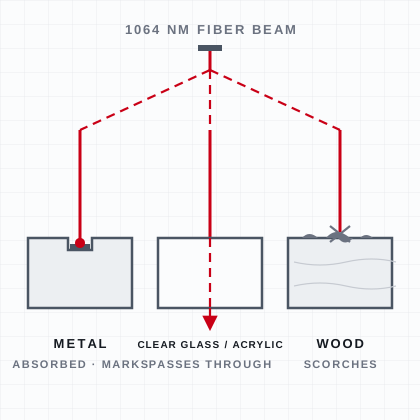
A fiber laser is the metal specialist: it engraves, etches, and anneals all common metals — steel, stainless, aluminum, brass, copper, titanium, and even gold and silver — and it marks many plastics with high contrast for part numbers and labels. Its 1064 nm wavelength is absorbed by metal but passes through clear glass and acrylic, so it can’t engrave those, and it’s a poor choice for wood (it scorches rather than marking cleanly). In short: fiber is unbeatable on metal and good on many plastics; for wood, glass, leather, and clear acrylic, use a CO2 laser. Boss’s FM Series fiber markers cover this metal work.
Metals (and plastics) are fiber’s strength.
Metal absorbs fiber’s 1064 nm wavelength efficiently, so a fiber marker engraves, etches, and anneals stainless steel, mild steel, aluminum, brass, copper, titanium, and precious metals — fast, permanent, and with no coating. It also marks many plastics with strong contrast, which is why fiber is the standard for serial numbers, barcodes, logos, tools, and industrial ID. Boss’s FM Series markers (and FC fiber cutters for cutting) live here.
What fiber can’t engrave well.
- Clear glass & clear acrylic — the beam passes through; use a CO2 laser.
- Wood — poorly absorbed; it scorches rather than marking cleanly. CO2 is the tool for wood.
- Leather, paper, fabric — organic materials are a CO2 job, not fiber.
So pick fiber for metal and plastic ID; pick CO2 for wood, glass, leather, and acrylic.
Related questions
What can a fiber laser engrave?
All common metals — steel, stainless, aluminum, brass, copper, titanium, gold, and silver — plus many plastics for high-contrast marking. It can’t engrave clear glass or acrylic (the beam passes through) and is a poor choice for wood, which it scorches. For those, use a CO2 laser.
What materials can a fiber laser engrave?
Metals are its specialty, and it marks many plastics well. Fiber anneals, etches, and engraves bare metal with no coating, making it ideal for industrial ID. Organic materials like wood, leather, and paper, plus clear glass and acrylic, are better suited to a CO2 laser.
What can a 20W or 60W fiber laser engrave?
A 20–60 W fiber marker engraves and etches metals and marks many plastics; higher wattage mostly means faster marking and deeper engraving, not different materials. These are markers, though — they engrave metal but do not cut it.
Can a fiber laser engrave guns or firearms?
Yes — fiber markers are commonly used to engrave serial numbers, logos, and custom designs on firearm metal components, since they mark steel and aluminum permanently and precisely. Follow all applicable laws for marking firearms.
Keep going
- Learn: Which Metals Cut Well — and How Thick
- Related: How do you laser engrave metal? · Can a fiber laser engrave wood? · What is a fiber laser engraver?
- Products: FM Series fiber markers