
Is it the right machine
Where UV earns its place, and where CO₂ is still the answer.
UV is a marker, not a cutter, and its field is small. On the right parts, nothing else on this site does the job as cleanly.
A good fit when…
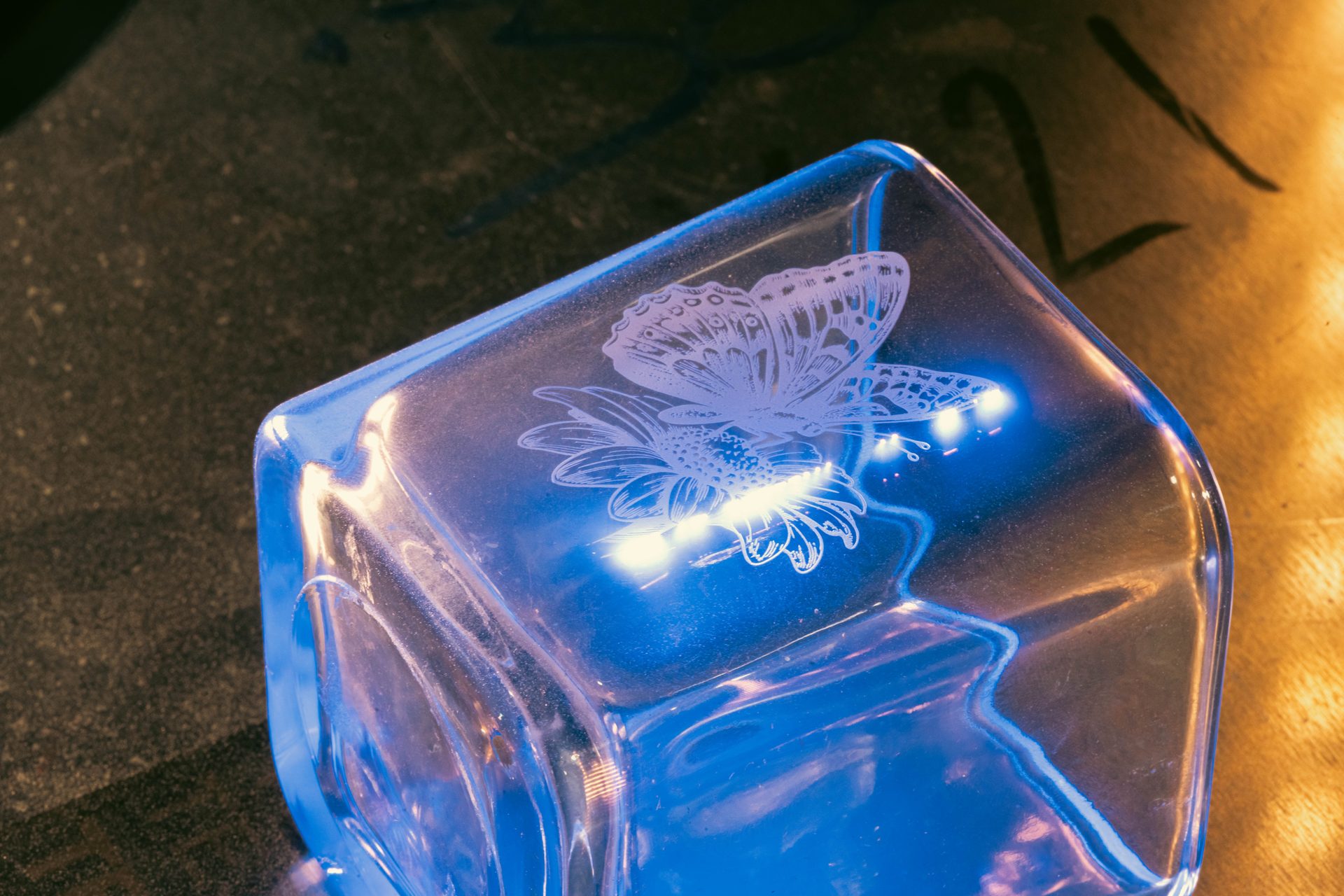
- Fine glass, crystal and precision ceramic, where CO₂ frost is too coarse or chips the surface
- Heat-sensitive plastics and electronics, including circuit boards
- Serial numbers, 2D codes, barcodes and running numbers on small parts
- Aerospace, medical and semiconductor part marking
- Labs and cleanrooms, where the compact air-cooled unit fits
Look elsewhere when…
- Engraving large surfaces: signs, panels, big glass. The marking field is about 4.3″ square.
LS Series → - Frosted drinkware and awards. CO₂ is the usual answer for that work.
Glass & drinkware → - Everyday marking on bare steel and aluminum, which a fiber marker is built for.
Metal marking → - Cutting. Both UV machines are markers; cutting is a different machine.
Laser cutters →
The models
Two UV markers.
Both mark at 355 nm. The UV Laser Marker is the everyday 2D machine; the 3D-UV adds depth.
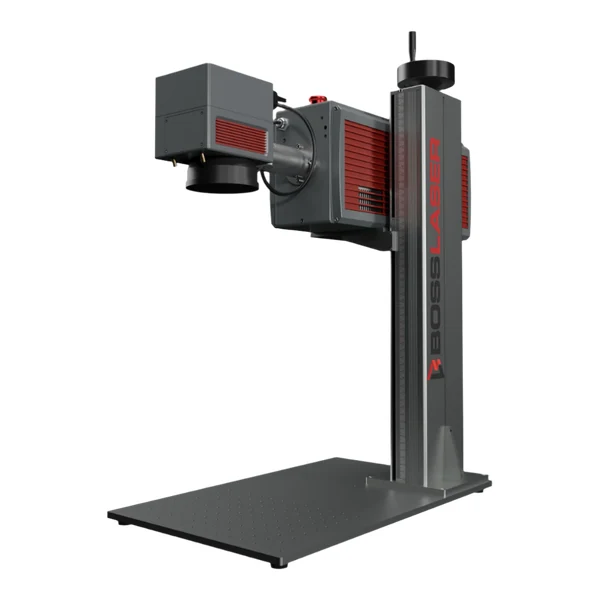
UV Laser Marker
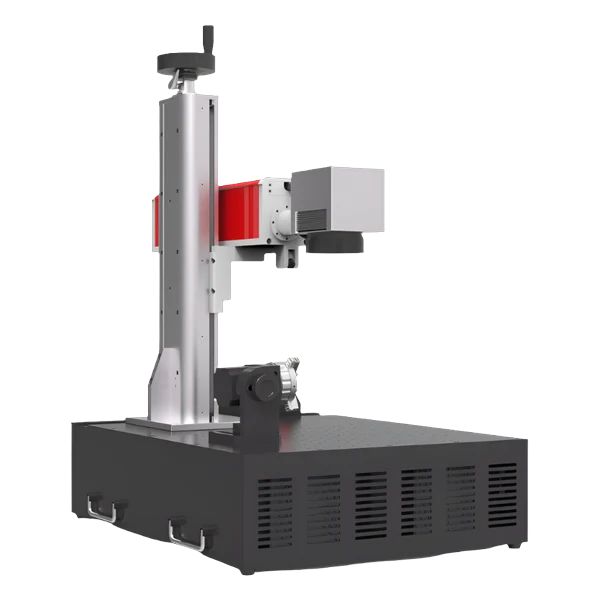
The everyday UV marker for text, codes, serial numbers and graphics on glass, ceramics, plastics and metals. The 3 W and 5 W are air-cooled desktop units; the 10 W is a taller, water-cooled station.

3D-UV Laser Marker
Marks in three dimensions as well as flat, including sub-surface marking inside crystal, with a 70 × 70 mm 3D field alongside the standard 110 × 110 mm lens.
Side by side
UV Laser Marker or 3D-UV?
Boss publishes different measures for each, so a few rows don’t line up exactly. They’re shown as Boss states them.
| UV Laser Marker | 3D-UV Laser Marker | |
|---|---|---|
| Best for | 2D marks: text, codes, serials, graphics | 3D and sub-surface marks, including inside crystal |
| Laser power | 3 W, 5 W or 10 W | 5 W |
| Wavelength | 355 nm | 355 nm |
| Marking field | 110 × 110 mm standard; larger on request | 110 × 110 mm 2D · 70 × 70 mm 3D |
| Beam quality (M²) | ≤ 2 | < 1.3 |
| Accuracy (as Boss states it) | Repeat 0.002″ | Position ±0.001 mm |
| Max speed | Not listed | 1,500 mm/s |
| Cooling | Air-cooled at 3 W and 5 W · water-cooled at 10 W | Water-cooled |
| Size | Desktop (3 W, 5 W): 26.5″ W × 29.5″ H · Station (10 W): 26.5″ W × 56″ H | 15.8″ W × 25″ D × 26.9″ H |
| Weight | 87.7 lb (configuration not stated) Verify | 127 lb |
| Electrical | 220V / 50Hz; Boss lists it as 110V compatible Verify | 110V / 60Hz |
| Warranty | Not listed on the product page | 2 years parts Verify |
| Manuals & parts | UV Laser Marker support | 3D-UV support |
Where it’s used
The work UV usually runs.
Each application page covers the materials and machine paths in depth.
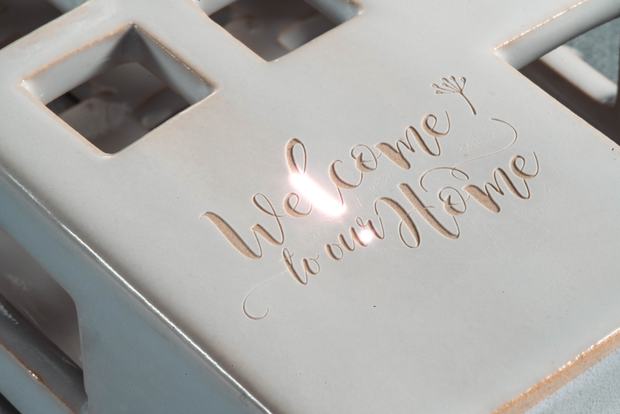
Glass, stone & ceramic
Where CO₂ runs out: very little heat, which fine glass and precision ceramic need. Less thermal stress, less chipping, finer detail.
See the application →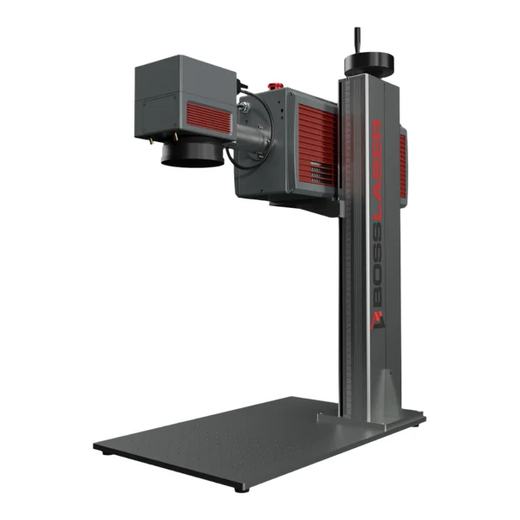
Metal marking & identification
Cold marking at roughly 355 nm for precise marks on sensitive parts. Common in electronics and medical work.
See the application →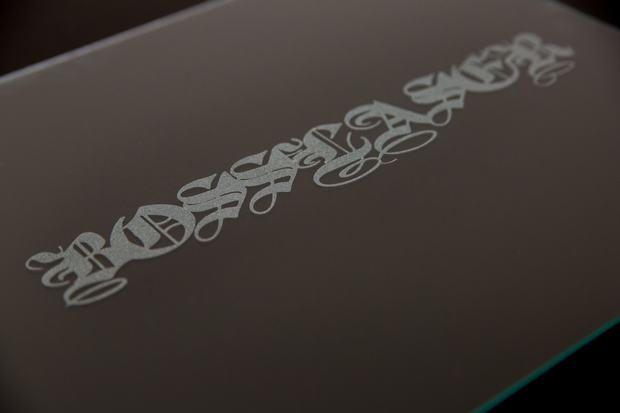
Glass as a material
Why glass frosts, why it chips, and what changes between CO₂ and UV. The background behind the machine choice.
See the application →Questions
What people ask before choosing a UV marker.
Straight answers from Boss’s published specs.
What’s the difference between the UV Laser Marker and the 3D-UV?
The UV Laser Marker marks flat: text, codes, serial numbers and graphics across a 110 × 110 mm field, at 3, 5 or 10 W.
The 3D-UV adds a 70 × 70 mm 3D field for marking in depth, including sub-surface marks inside crystal, and runs at 5 W, water-cooled. If your marks are all on a surface, the UV Laser Marker is the simpler machine.
Is the UV Laser Marker air-cooled or water-cooled?
It depends on the power you choose. The 3 W and 5 W are air-cooled desktop units; the 10 W is a water-cooled station. The 3D-UV is water-cooled.
Boss describes the air-cooled design as compact, saving energy and space, which makes it a good fit for labs, cleanrooms and mobile setups.
How big a part can a UV marker handle?
The standard marking field is 110 × 110 mm, about 4.3″ square; the 3D-UV’s 3D field is 70 × 70 mm. The field limits the size of the mark, not the part: the UV Laser Marker’s open platform takes parts larger than its field.
Boss offers expanded marking areas on request.
Which power do I need: 3, 5 or 10 W?
Boss doesn’t publish a material-by-power chart for UV, so this is a conversation rather than a lookup. The 3 W and 5 W units are air-cooled desktop machines; the 10 W is a taller, water-cooled station.
Send the Spec Desk your part, the material and the mark you need.
Other machines
Not quite the right machine?
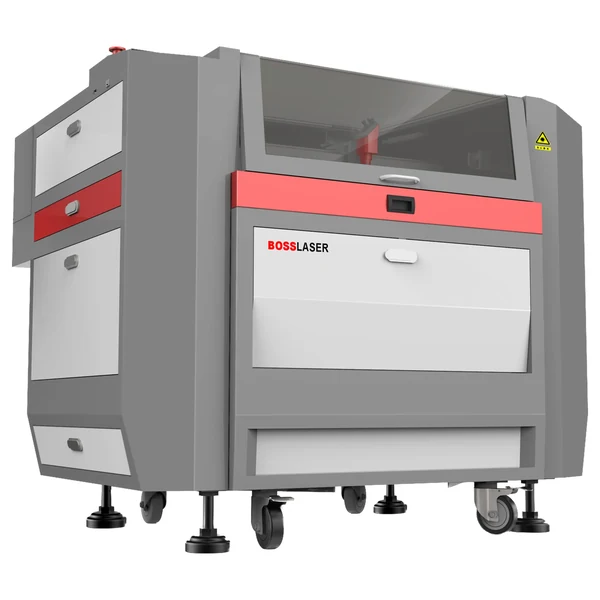
Each of these answers a different job. Start from the work, not the model name.

Have a part in mind?
Send the Spec Desk the part, the material and the mark. They’ll tell you whether UV is the right tool and which one.
Specs are Boss’s published product-page spec tables (verified 2026-07-30). Laser power, drive, cooling and air-assist choices are read live from the Boss store, which is where current pricing lives.